CFA Piles, Bored Piles or Micropiles – Choosing the Right Pile
CFA piles, bored piles or micropiles? How to choose a pile type in the UAE based on loads, ground conditions, site access and nearby structures.
October 22, 2026
When a building needs deep foundations, the first question is which type of pile to use. The answer depends on the loads, the ground, the space on site and what stands next door. These are the three types we install most often.
CFA piles
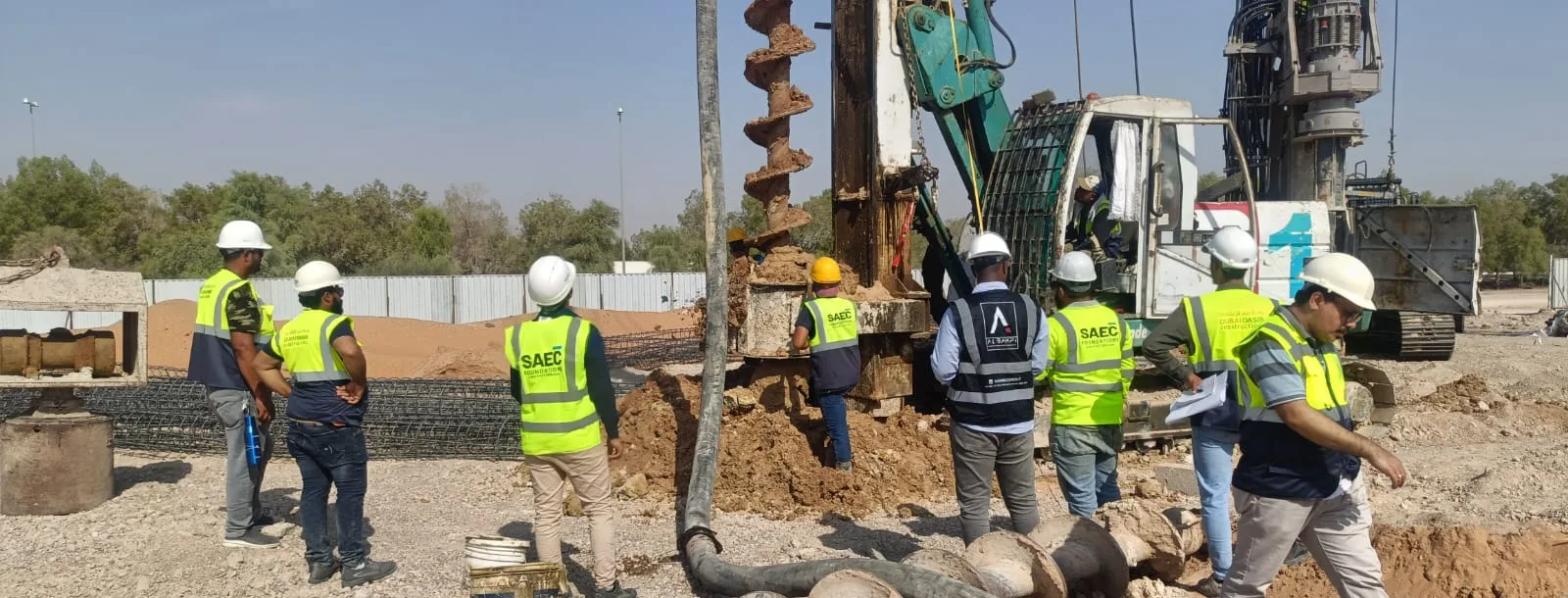
A CFA (continuous flight auger) pile is drilled with a hollow auger that stays in the ground while it turns. When the auger reaches depth, concrete is pumped down through its hollow stem as it is withdrawn, and the reinforcement cage is pushed into the fresh concrete. The hole is never left open, so CFA works well in sand and below the water table without casing. It is quick and quiet, which suits schools, public buildings and sites in built-up areas.
We used CFA piles for a school in Abu Dhabi and a public facility, in both cases designing, installing and testing the piles.
Bored piles
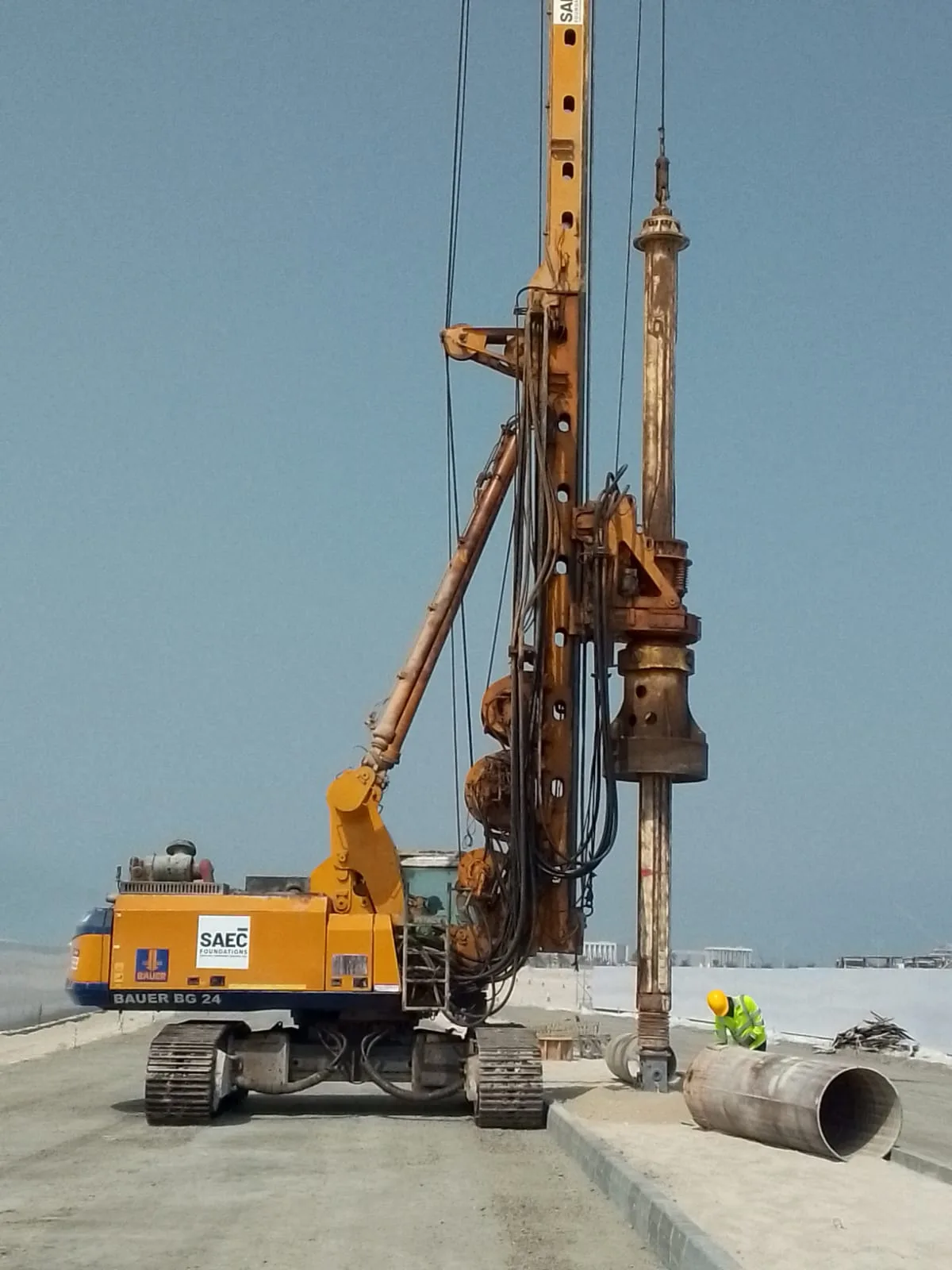
Bored piles are drilled with a rotary rig, often with a temporary steel casing through the loose upper layers. They can be built at larger diameters and greater depths than CFA piles, so they are used for heavy loads: bridges, towers, jetties and rail structures. Our post on cased bored piles explains the method step by step.
Micropiles
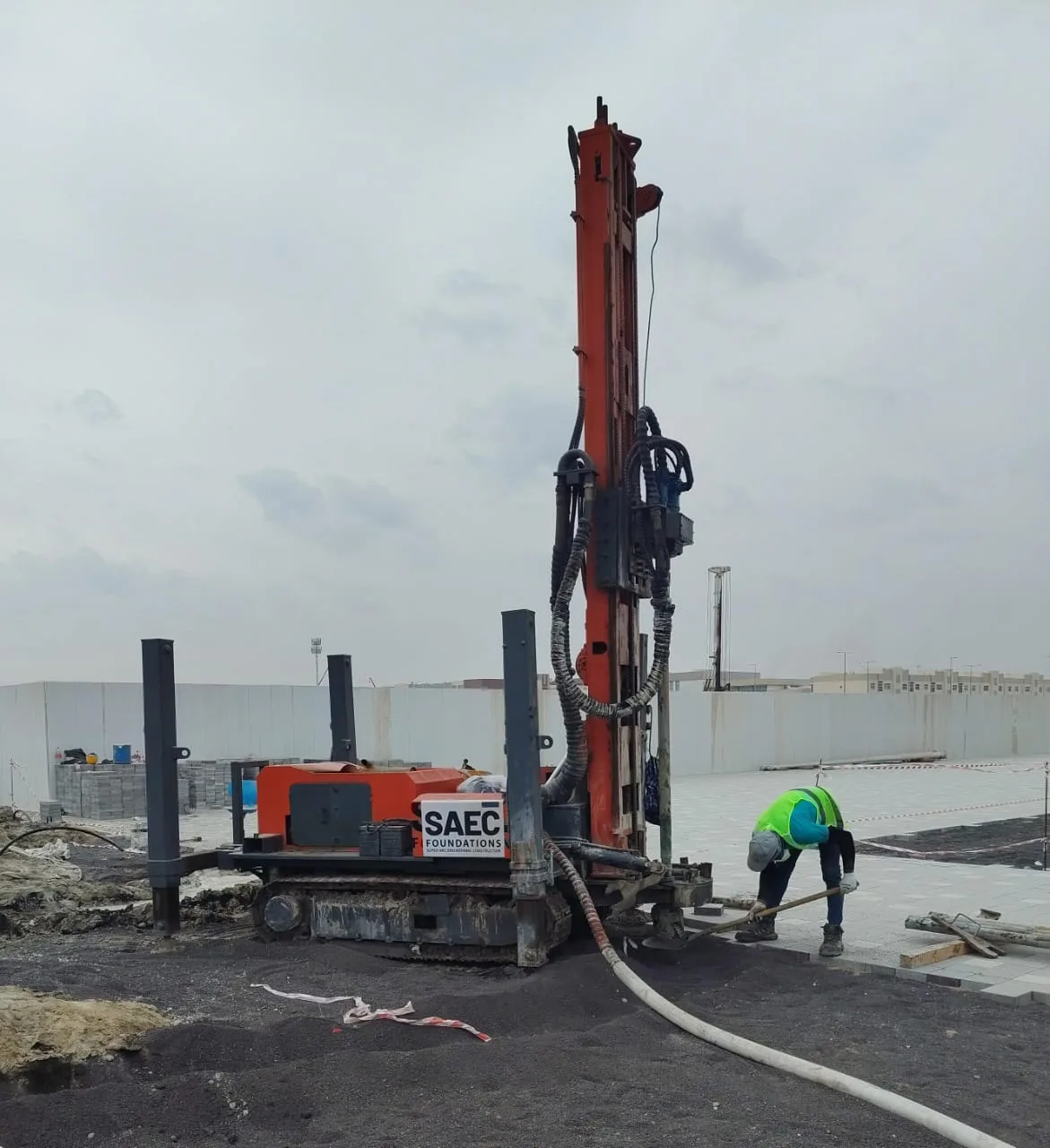
Micropiles are small-diameter piles, drilled and grouted, with a steel bar or tube at the centre. Each one carries less load than a large pile, so they are used in groups. Their advantage is the small rig. Micropiles can be installed where headroom is low, access is tight or a large rig would disturb an existing structure.
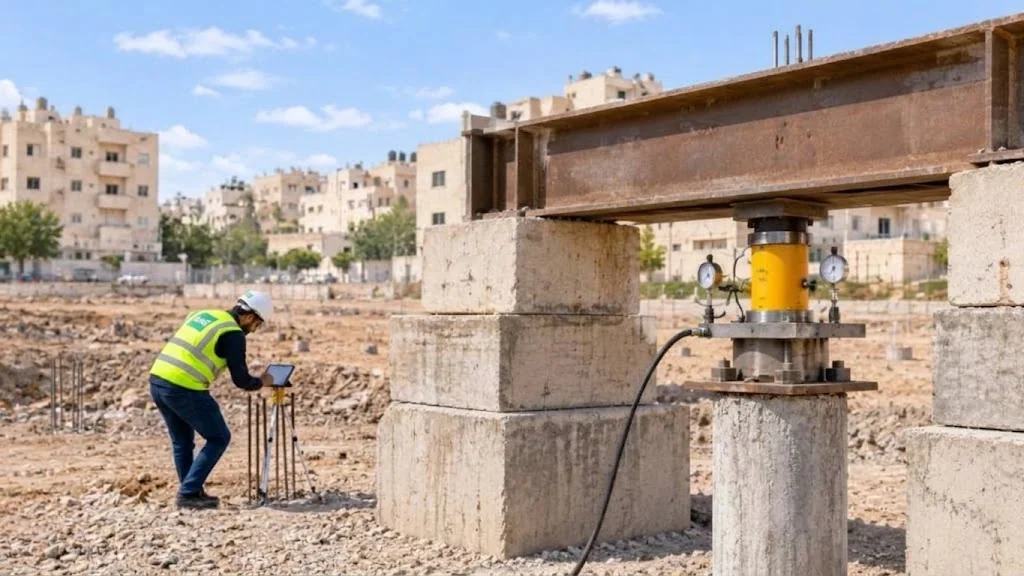
SAEC designed and installed 450 micropiles for a school in Sas Al Nakhl and 97 micropiles at Al Mirfa Port, where static load tests confirmed their capacity.
What decides the choice
The geotechnical report comes first. It tells us the soil layers, the groundwater level and the depth to a good bearing stratum. From there the loads per column, the site access and the effect on neighbouring buildings narrow the options. Often two types would work, and the choice comes down to programme and cost.
The three types compared
CFA piles offer fast production and suit sand and ground below the water table. Concrete supply must be continuous, and cage length and hard layers can limit their use.
Bored piles suit heavy loads, larger diameters and greater depths, and can be taken into rock. They need a larger rig, casing or drilling fluid, and more handling of spoil, so production is usually slower.
Micropiles suit low headroom, tight access and work beside existing structures. Each pile carries less load, so more piles are needed and the cost per unit of load can be higher.
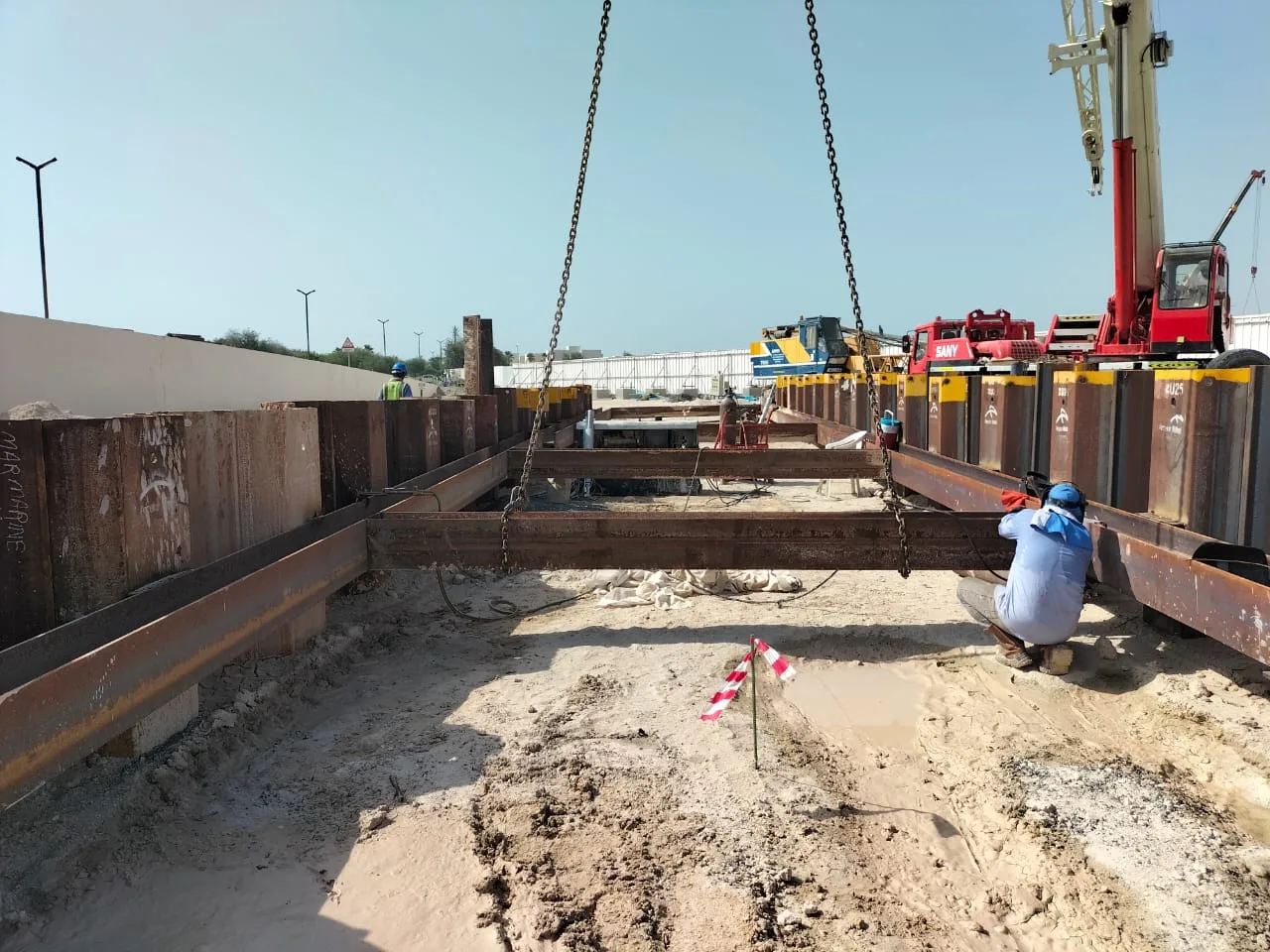
Our projects show that range: CFA piling and shoring foundations for an ENOC station, bored piling for high-voltage transmission lines in Al Dhafra and micropiles for warehouses in Abu Dhabi.
How piles are tested
Because a finished pile cannot be inspected directly, the project specification sets a testing regime. A static load test measures how a pile responds under load. Integrity testing screens piles for defects along the shaft. Cross-hole sonic logging examines concrete quality through tubes cast into larger piles, and dynamic testing can be used as a further check of capacity.
Choices that often increase cost
Choosing before the soil report: the geotechnical investigation can rule out a preferred pile type or show a cheaper one.
Forgetting the rig: large rigs need a stable working platform, access and clearance from overhead lines and buildings.
Leaving tests out of the programme: preliminary load tests must be planned, because concrete has to gain strength before testing.
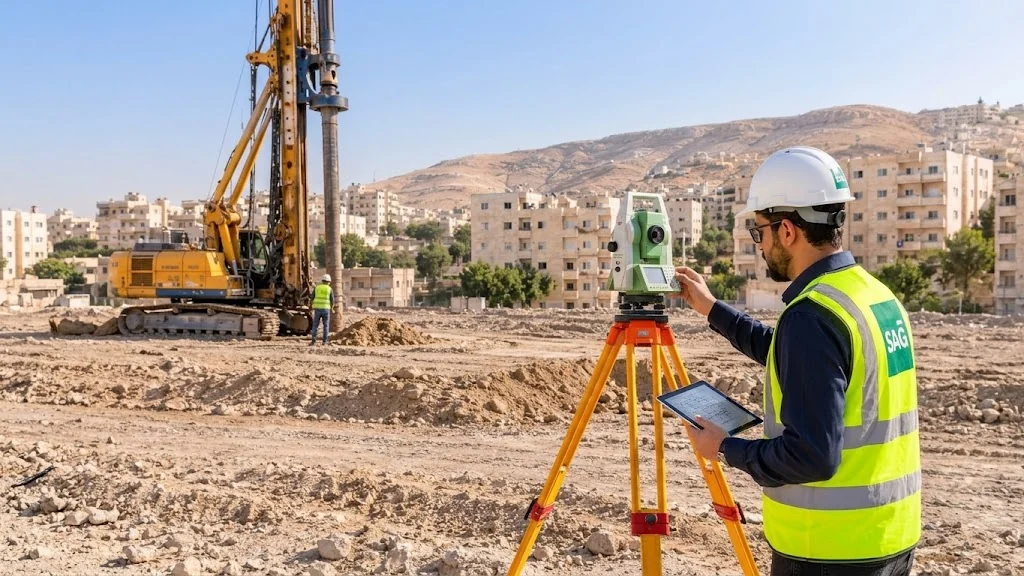
Overlooking the neighbours: ground movement and vibration near existing buildings can change the method and require monitoring.
Frequently asked questions
Which pile type is the cheapest?
There is no single answer. Compare the complete cost of carrying the required load on your site, including mobilisation, testing, spoil removal and programme. A low rate per metre can still be the more expensive solution.
Can piles be installed next to an existing building?
Yes, with the right method. Micropiles and CFA piles are common options where vibration and access are concerns, but ground movement and rig clearance still need checking for each site.
What is needed to price piling works?
The soil report, foundation layout, pile loads, site access details and the project specification. A working pile design or a design-and-build brief can both be priced.
See the full list of our foundation work under construction and infrastructure services. Comparing foundation options for a project? Send us your soil report and loads for technical input from SAEC.
Share this article
If you found this article helpful, share it with others