What a Geotechnical Investigation Gives the Designer
What a geotechnical investigation covers in the UAE, from boreholes and lab tests to the report, and how foundation designers use the results.
October 22, 2026
Every foundation design starts from the same question: what is under the site? A geotechnical investigation answers it with measurements instead of assumptions. Without that data, the designer has to guess, and guesses in foundation design are paid for in settlement, redesign or overdesign.
The fieldwork
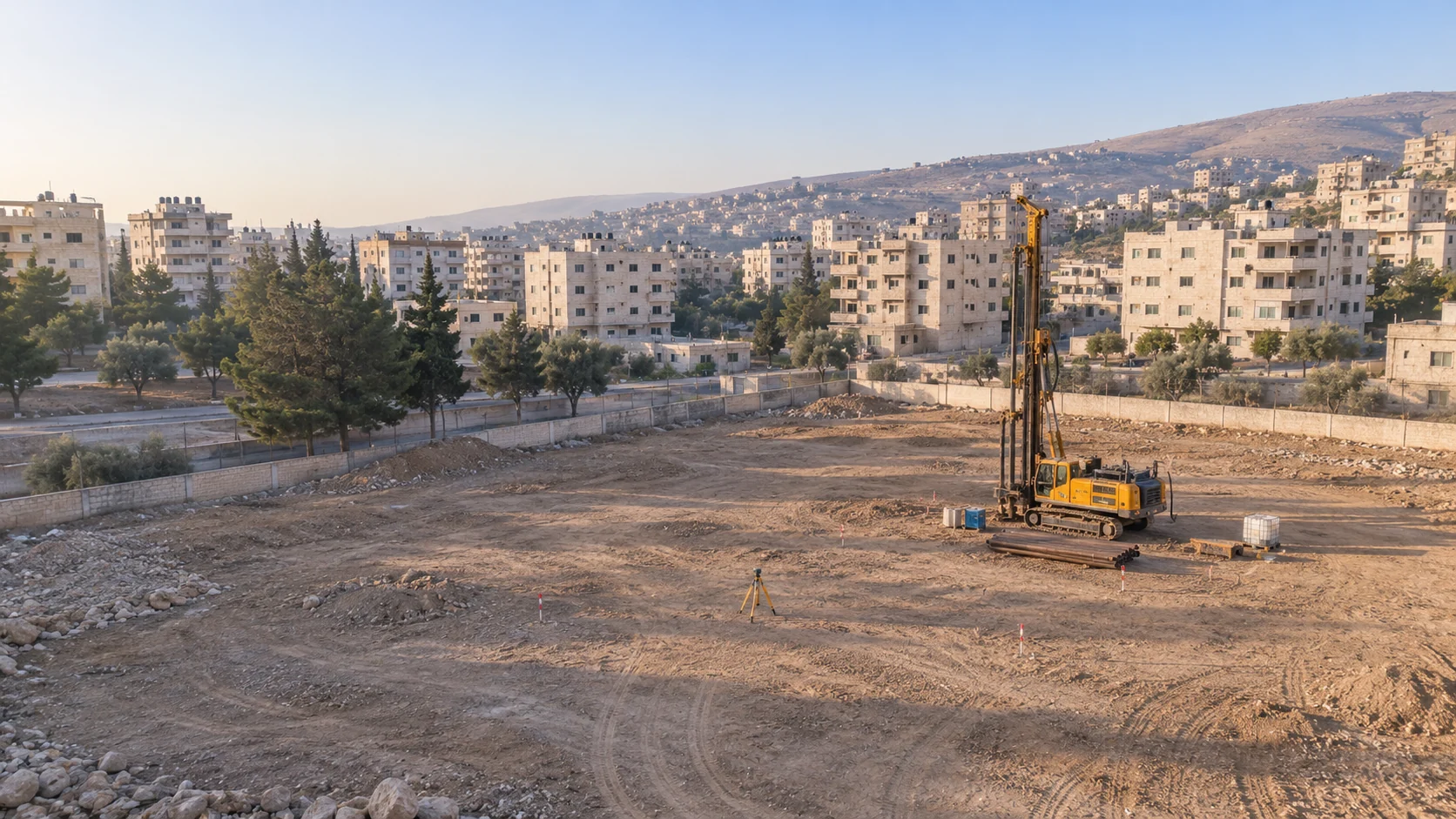
The investigation is planned around the proposed structure. Boreholes are drilled where the loads will be, to a depth below the zone the foundations will stress. During drilling the crew records the soil and rock layers, takes samples and carries out in-situ tests such as the standard penetration test. The groundwater level is measured in each borehole.
The laboratory
Samples go to the laboratory for classification, strength and chemical tests. The chemistry matters in the Gulf, where sulphates and chlorides in soil and groundwater attack concrete and steel. Those results set the concrete grade, cover and protection for the foundations.
The report
The report brings the field and laboratory data together. It describes the ground conditions, identifies hazards such as loose sand, soft layers or cavities, and gives engineering recommendations: suitable foundation types, bearing values, pile capacities and settlement estimates. Where the ground is too weak as it stands, it may recommend soil improvement.
Examples from our work
For MUSANADA, Super Arc Consultant planned, supervised and carried out a geotechnical investigation for roads and infrastructure in Mohamed Bin Zayed City, to Abu Dhabi Municipality requirements. In Al Falah, the investigation for two villas led directly to a soil improvement design based on the data from both plots.
What to provide before the investigation
The scope is set by the project, so the geotechnical engineer needs the site location and plot plan, the structure type, the number of floors and any basement depth, approximate column loads, known utilities, and any earlier reports. The clearer this information is, the better the boreholes can be placed and the lower the chance of a second round of fieldwork.
Common tests and what they show
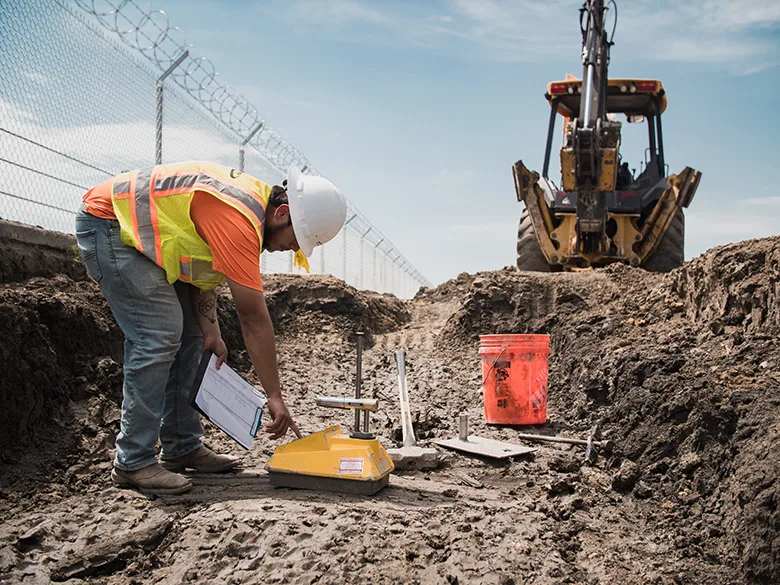
Standard penetration test: a test carried out in the borehole that indicates how dense or stiff the soil is.
Rock coring: recovers rock samples for logging and strength testing, and shows how sound the rock is.
Classification tests: grain size and plasticity tests that show how the soil is likely to behave.
Chemical tests: sulphate, chloride and pH results that guide the protection of concrete and steel.
Permeability tests: show how easily water moves through the ground, which matters for dewatering and excavation design.
Test methods follow recognised standards named in the project specification or required by the relevant authority.
Ground conditions to watch for in the UAE
Ground conditions vary, but investigations here often encounter loose to medium dense sand, shallow saline groundwater, weak sedimentary rock and, in low-lying coastal areas, sabkha. Conditions can change between nearby plots, so each site needs its own assessment.
How the findings shape the design
The results decide whether shallow foundations will work, whether piles are needed or whether the ground can be improved instead. They also inform excavation support, dewatering and concrete durability, which makes the report one of the most useful documents on the project.
Our work includes geotechnical design for six rail micro stations in Abu Dhabi, a geotechnical review and foundation design for a lifestyle hotel in Saudi Arabia, and an investigation and micropiles for a healthcare centre in Al Shamkha.
Frequently asked questions
How many boreholes does a project need?
There is no single number. It depends on the size of the site, the loads, how variable the ground is and any authority requirements, so the geotechnical engineer sets it for each project.
Can I use the report from a neighbouring plot?
It is useful background, but it does not replace an investigation of your own site. Layers and groundwater can change over short distances, and the earlier report was planned for a different structure.
When should the investigation be done?
As early as possible, ideally before foundation design and pricing. The results can change the foundation type, the programme and the budget.
Our geotechnical services are listed under engineering and design. Need a site investigation or foundation advice? Send us your plot plan and structure details.
Share this article
If you found this article helpful, share it with others