Excavation Support and Dewatering – Keeping a Deep Dig Dry and Stable
How sheet pile shoring and wellpoint dewatering keep deep excavations stable and dry in UAE ground, and what the design and site team must control.
October 22, 2026
Basements, pump stations and underground tanks all start with a deep excavation. In much of the UAE two problems arrive together: loose sand that will not stand at a steep slope, and groundwater only a few metres down. Shoring deals with the first. Dewatering deals with the second.
Sheet piles, walers and struts
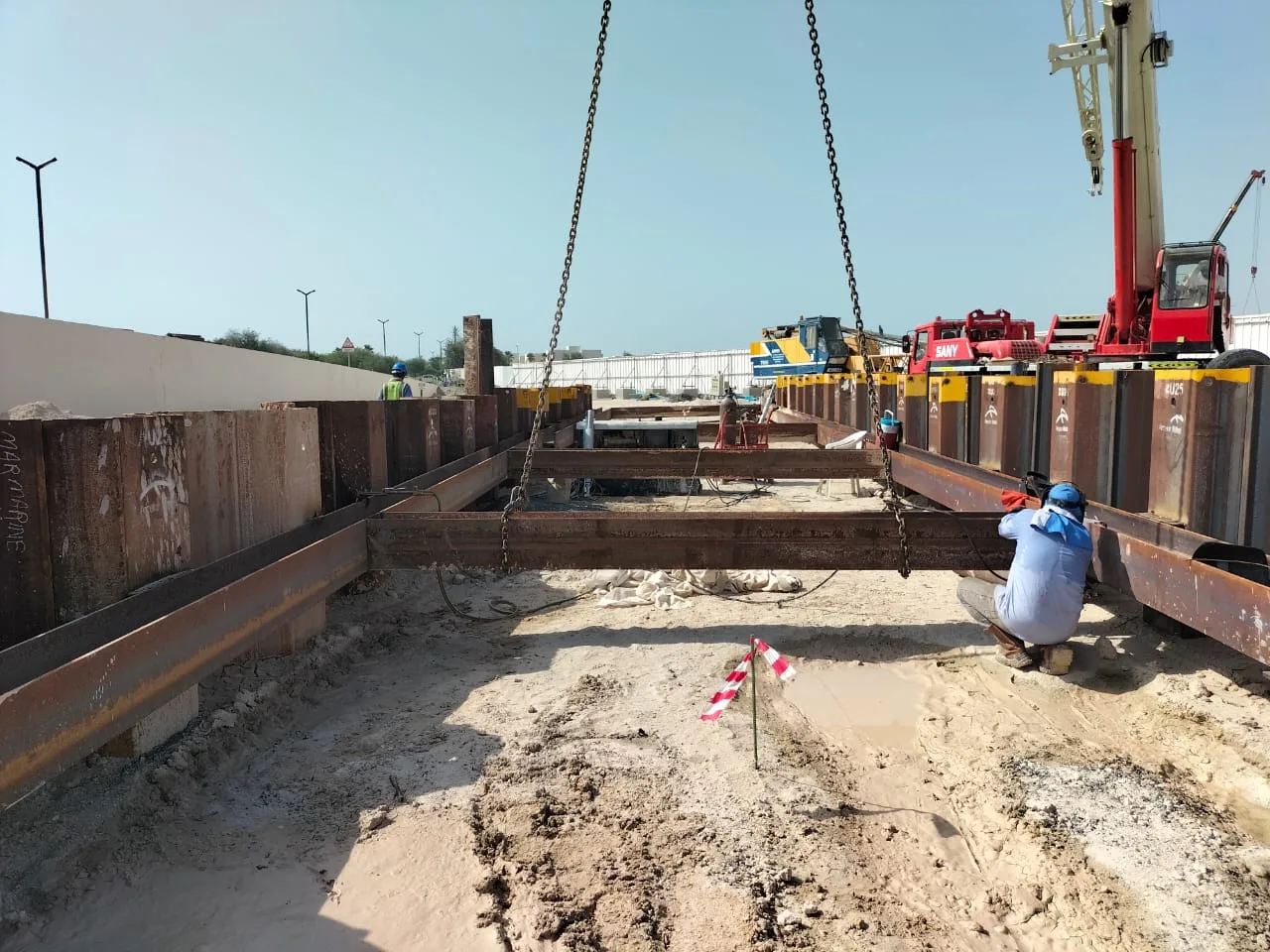
Steel sheet piles are interlocking sections driven or vibrated into the ground before digging starts. Together they form a continuous wall that holds back soil and slows the flow of water. As the excavation goes deeper, steel walers are fixed horizontally along the inside of the wall and struts are set across the excavation between them, so each side props the other.
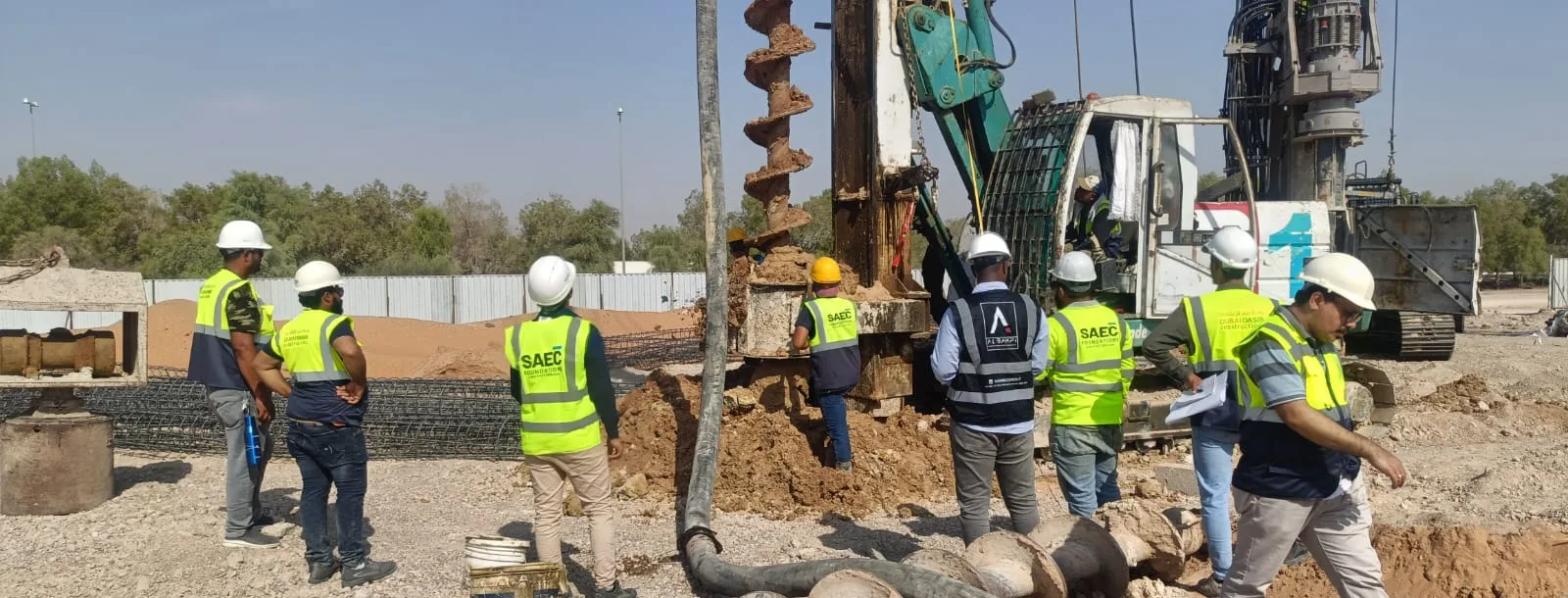
Where hard layers would stop the sheets from going down, holes are drilled along the wall line first. We used this method for excavation support at Al Jurf and for shoring beams at Liwan.
Lowering the water table
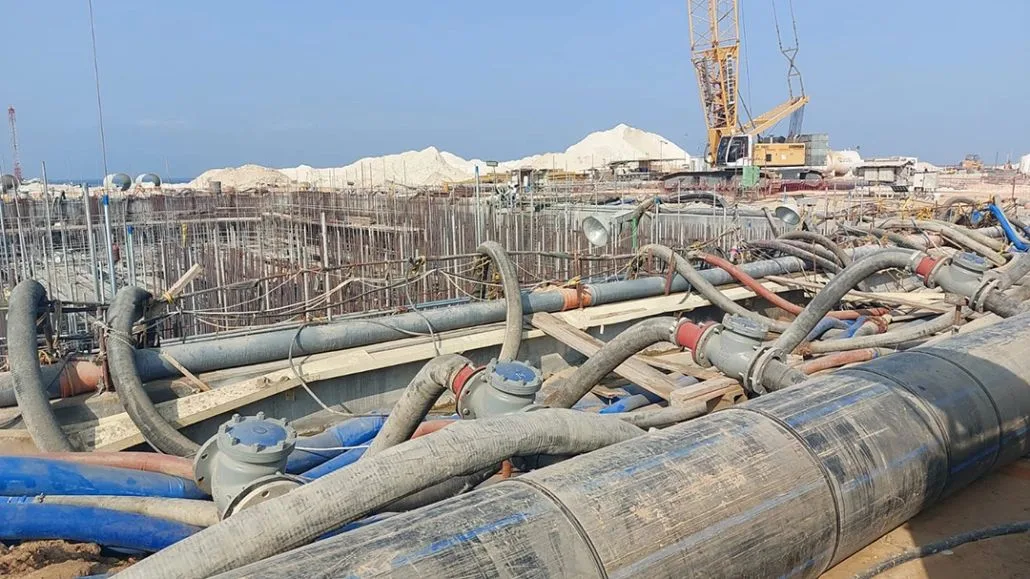
A common way to lower groundwater is a wellpoint system. Small-diameter wells are installed around the excavation, each connected by a flexible hose to a header pipe. Pumps draw water out of the ground through the header, lowering the water level below the base of the dig.
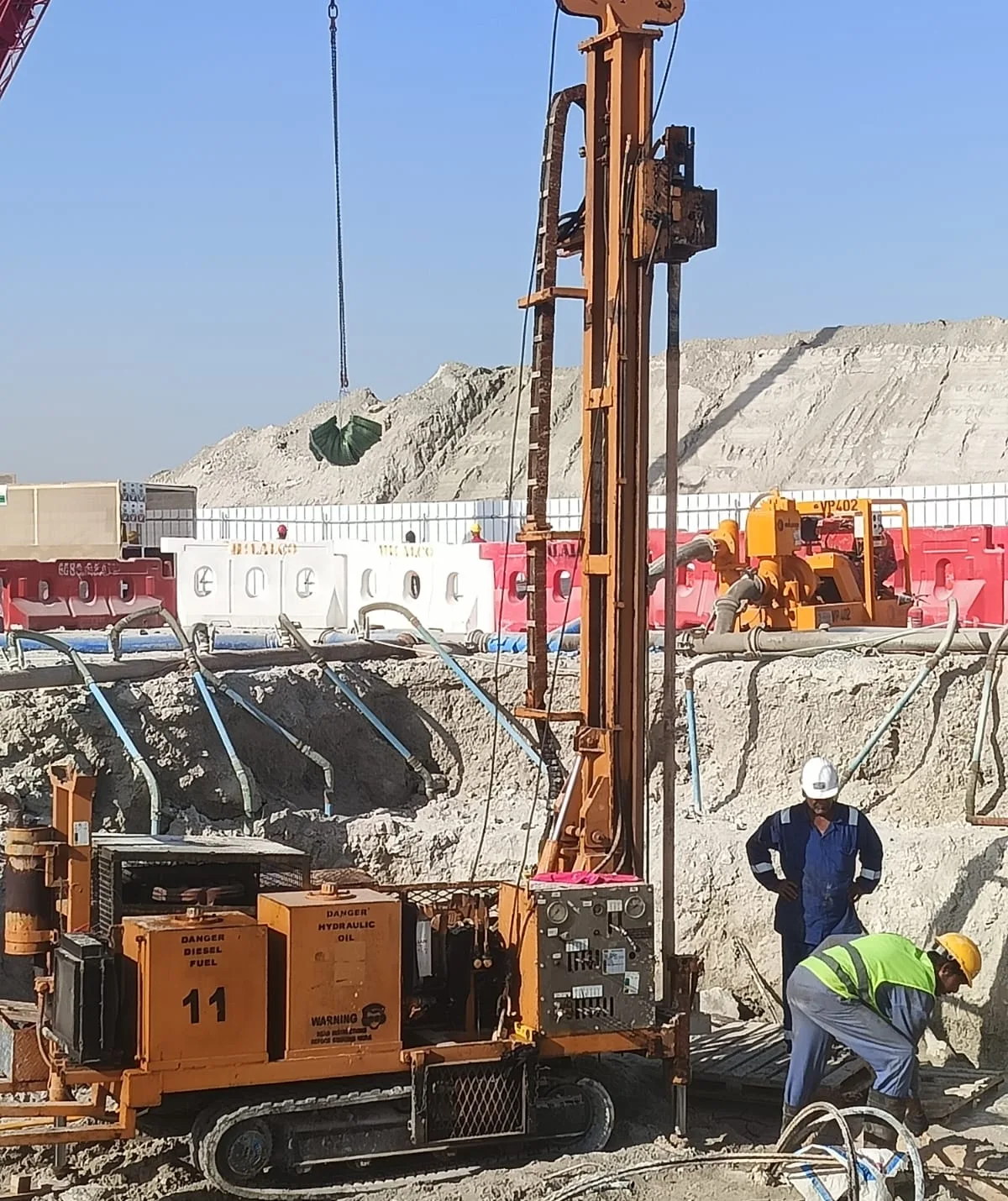
In this photo the wellpoint hoses run down the side slopes, the dewatering pump sits at the top of the excavation, and a rig is already working on the dry base.
Working at the bottom
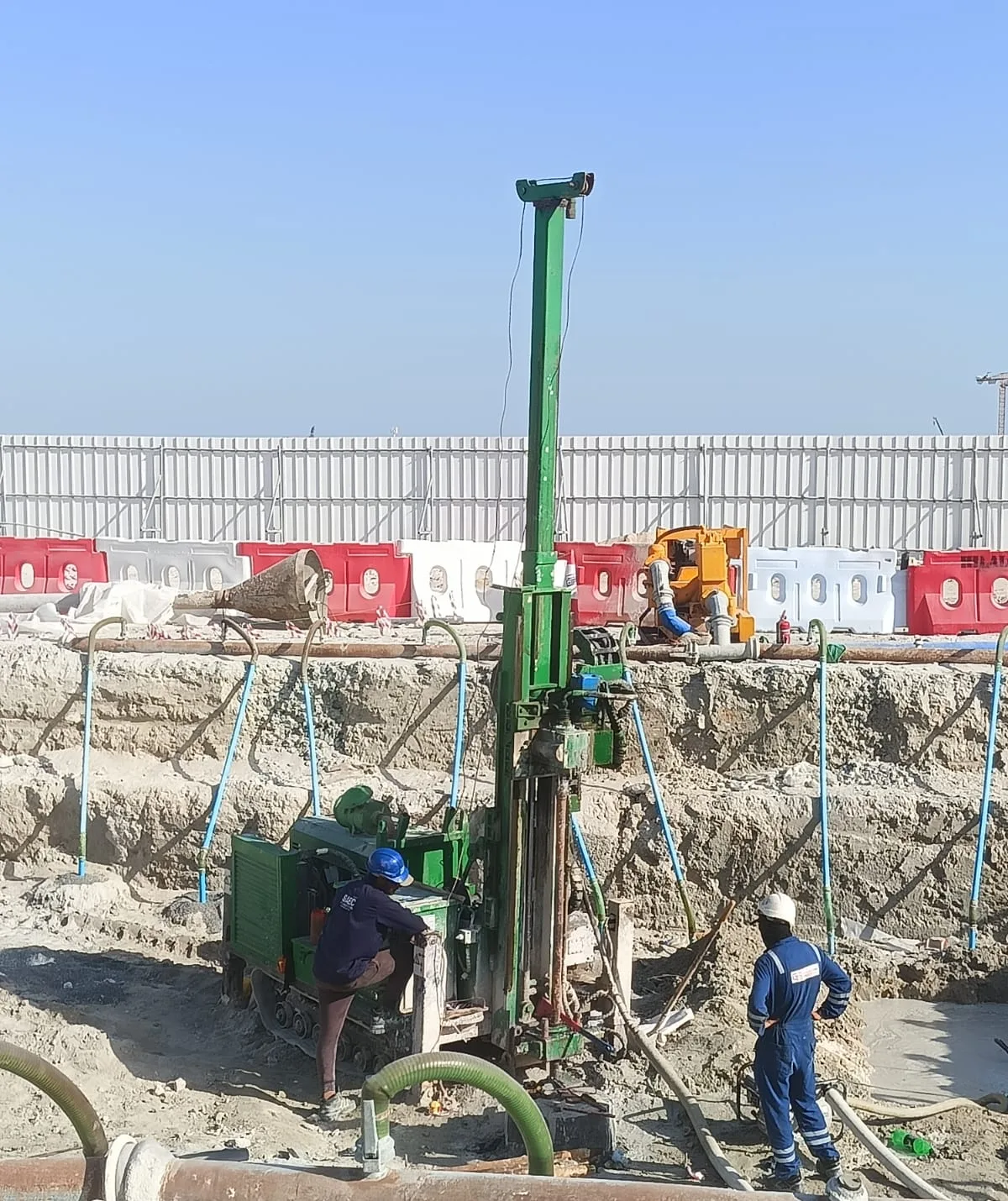
Once the water is down and the sides are held, the excavation becomes a working platform. Foundation rigs, concrete crews and steel fixers can work at the bottom as on any other site. Pumping usually continues until the structure is heavy enough to resist uplift from the water around it.
Choosing a shoring system
Sheet piles are one option among several. The right system depends on the excavation depth, the soil, the groundwater level, the space available and what stands next to the dig.
Steel sheet piles are quick to install and can often be extracted afterwards, and they suit sand and water-bearing ground. Driving them can cause noise and vibration, which needs controlling near existing buildings.
Contiguous and secant pile walls are stiffer and move less, so they suit deep basements beside existing structures. Interlocking secant piles also help cut off groundwater.
Soldier piles with lagging can be economical where groundwater has been lowered and the soil can stand for a short time between the beams.
Diaphragm walls suit very deep basements and heavy loads, and can form part of the permanent structure.
Existing conditions matter as much as the new work. We assessed an existing shoring system at Fashion Z1 in Dubai, developed a shoring design solution for an obstructing manhole, and carried out circular shaft works on Yas Island.
What the design has to check
A shoring design is checked for more than the strength of the wall. The main questions are:
Stability: whether the wall is embedded deeply enough to stay stable at every stage of the excavation.
Member forces: the bending and axial loads in the wall, walers and struts, including while props are being installed or removed.
Base failure: whether water flowing upward beneath the wall could cause piping or heave at the bottom of the excavation.
Movement: how far the wall may deflect and how much the ground behind it may settle, and what that means for neighbouring buildings and utilities.
Controlling the risks of dewatering
Wellpoints work by suction, so a single stage is usually limited to lowering the water by about 5 to 6 m. Deeper drawdown needs several stages or deep wells.
Lowering groundwater also has effects beyond the site. It can cause settlement under nearby structures, and pumped water has to be disposed of in line with authority requirements. Piezometers and settlement points, reviewed against agreed trigger levels, give early warning so that pumping or the support system can be adjusted.
Frequently asked questions
How long does dewatering need to run?
Pumping normally continues until the structure and backfill are heavy enough to resist uplift, at the stage set by the designer. Stopping too early can lift a basement slab or an empty tank.
Can sheet piles be removed afterwards?
Often, yes, provided removal will not disturb the new structure or the surrounding ground. Where it would, they can be left in place and cut down below finished level.
What information is needed to design the system?
At a minimum: a geotechnical investigation, the excavation layout and depth, groundwater levels, and details of nearby structures and utilities.
Our shoring and excavation work is listed under construction and infrastructure services. For related piling methods, see CFA piles, bored piles or micropiles. Planning a basement, pump station or underground tank? Send us your drawings and soil report to discuss the options.
Share this article
If you found this article helpful, share it with others