Pile Load and Integrity Testing for Syrian Projects
What pile load and integrity tests prove, which tests a project needs, and how investors in Syria can gain confidence in deep foundations.
November 6, 2026
Once a pile is cast, nobody can walk around it and inspect it. Everything above ground depends on an element hidden below it, so testing is how owners and investors gain confidence in the foundation. As reconstruction projects in Syria grow larger, a clear testing programme becomes a practical form of risk control.
Load tests: can the pile carry the load?
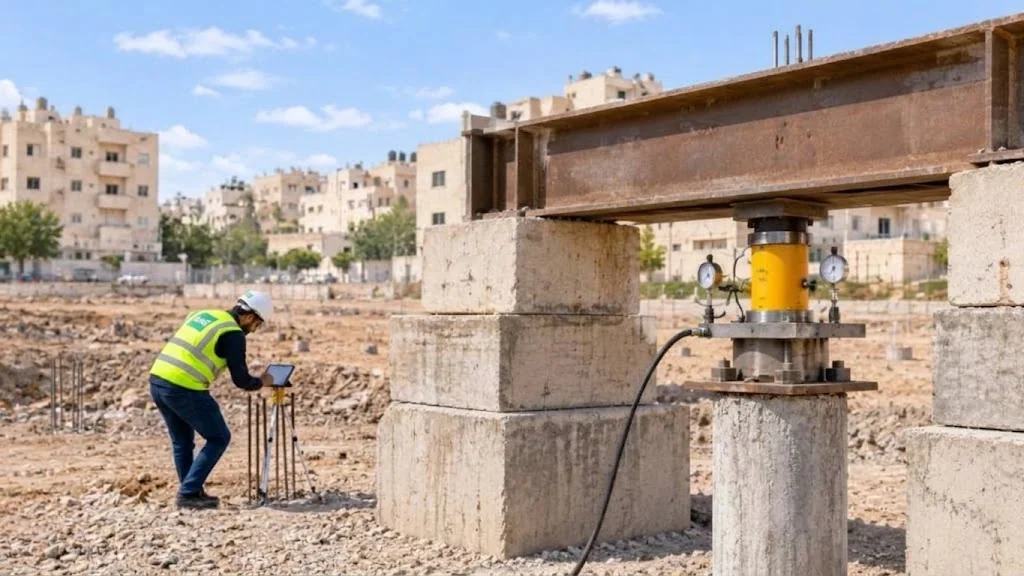
Static load testing applies a measured load through a jack and reaction system while gauges record movement. It gives a direct picture of how the pile behaves. Dynamic load testing uses a controlled impact and sensors to estimate capacity, and it is often faster and easier to organise on several piles.
Integrity tests: is the pile sound?
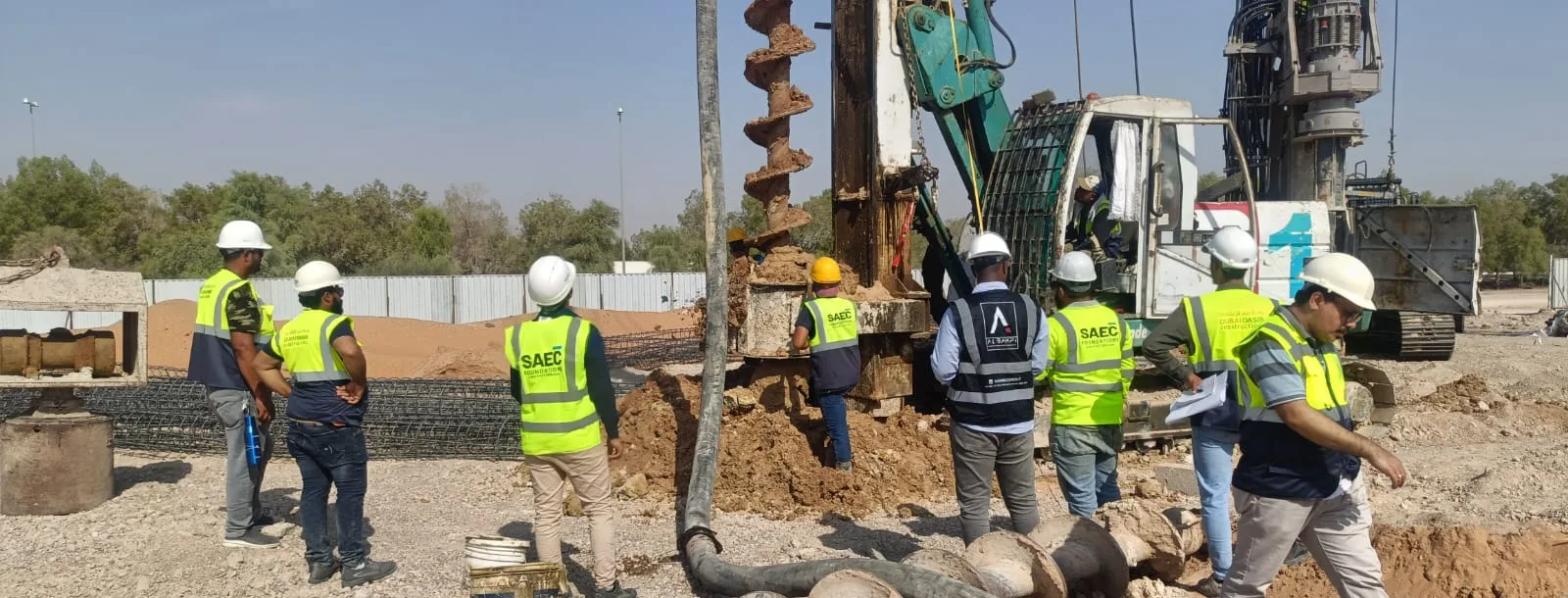
Low-strain integrity testing uses a light hammer blow and sensors to screen piles for possible defects along the shaft. Cross-hole sonic logging sends ultrasonic signals between tubes cast into the pile to examine the concrete in more detail, and it suits larger bored piles. Caliper testing measures the bore shape before concreting.
How to plan a testing programme
The project specification should define the test types, number, locations, loads and acceptance criteria before work starts. Preliminary tests can confirm or refine the design, while working pile tests check production quality. Tests need time and access in the programme, because concrete must gain strength first.
What investors should ask for
Ask for the pile records as well as the test reports: position, depth, ground encountered, concrete volumes and reinforcement checks. If a result is unclear, the engineer should explain what further checks or remedial steps are needed. It is also worth confirming the calibration of equipment and the qualifications of those carrying out and interpreting the tests.
Project experience
On a rail infrastructure project in Abu Dhabi, SAEC’s 40 bored piles went through static load, integrity, cross-hole sonic and caliper testing. At a port project in Abu Dhabi, static load tests confirmed the capacity of 97 micropiles. We bring the same quality approach to projects in Syria, supported by our guide to cased bored piles.
Frequently asked questions
Does every pile need a load test?
Usually not. A representative number is load tested, and integrity tests may cover more piles or all of them, as the specification requires.
Which test is best?
They answer different questions. Load tests address capacity, while integrity tests look for defects, so projects often use both.
Who should interpret the results?
A qualified engineer, using the pile records and ground data, since a test result should not be read in isolation.
Need piling or an independent testing plan in Syria? Contact Super Arc Group to discuss your project.
Share this article
If you found this article helpful, share it with others