Bored Piling with Temporary Steel Casing – How It Works
How bored piles are built with temporary steel casing in loose ground and below the water table, from setting out to concreting and testing.
October 22, 2026
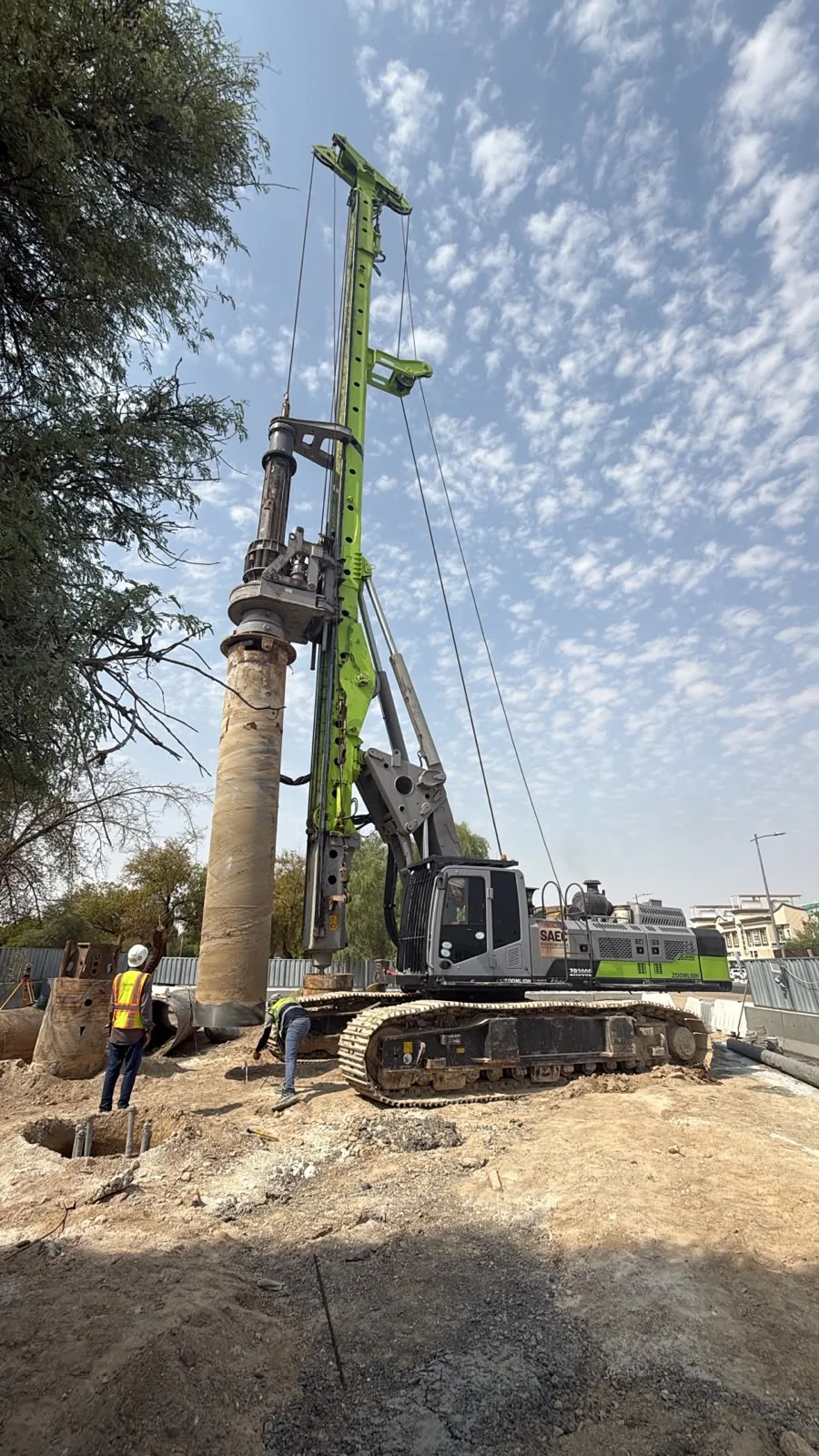
Bored piling with temporary steel casing is a common way to build deep foundations in loose ground and below the water table. The photo below shows one of our rotary piling rigs on site, holding a length of steel casing above the pile position. This post explains what that casing is for and how a cased bored pile is built.
What a bored pile is
A bored pile is a reinforced concrete column cast in a hole drilled into the ground. The rig drills the hole, a steel reinforcement cage is lowered in, and the hole is filled with concrete from the bottom up. The finished pile carries the building load down to stronger soil or rock.
Why the casing is needed
In much of the UAE the top of the ground is loose sand or fill, and groundwater is often only a few metres down. An open hole in that ground can collapse before the concrete goes in. A steel casing pushed into the top section of the bore holds the sides up and keeps loose material out. Below the casing, where the ground is stiffer, the hole can usually stand on its own or under drilling fluid.
The sequence on site
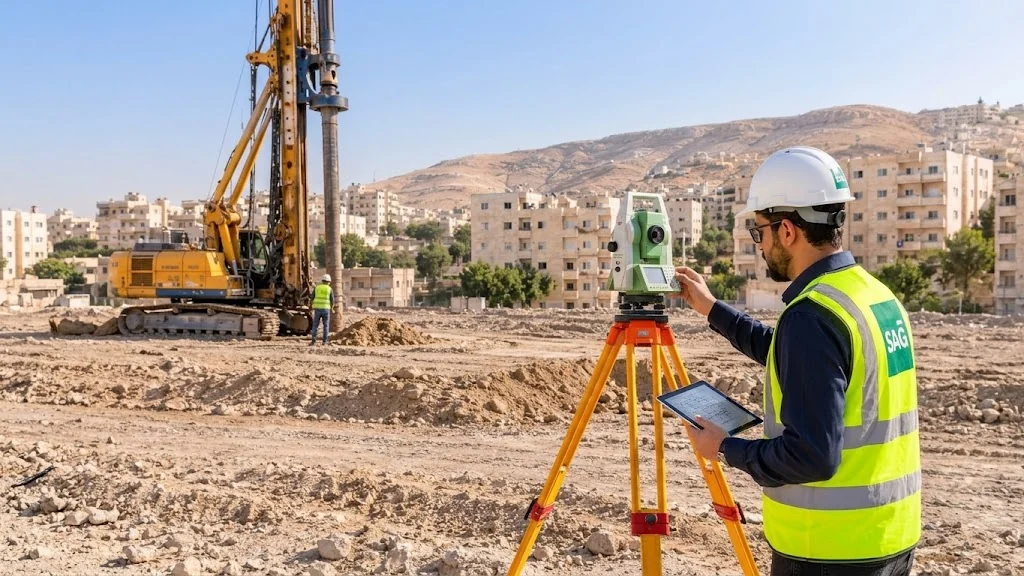
The surveyor sets out the pile position, which is why you see a survey instrument at the edge of the photo. The rig then drives or screws the casing into the ground and drills inside it with a kelly bar and drilling bucket. When the hole reaches the design depth, the base is cleaned and the cage goes in. Concrete is placed through a tremie pipe so it fills the hole from the bottom without mixing with water or soil. The casing is pulled out while the concrete is still fresh.
Testing the finished piles
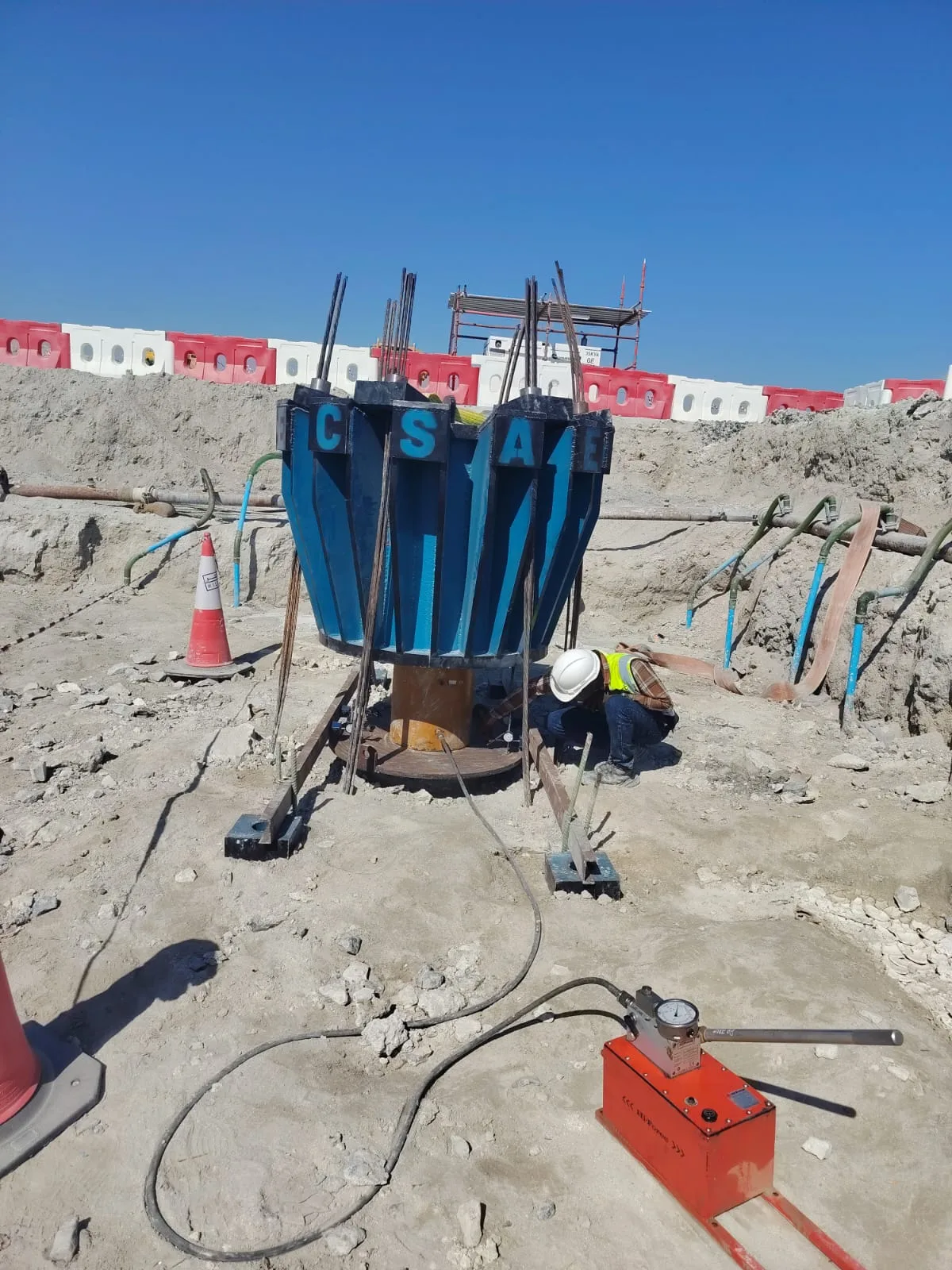
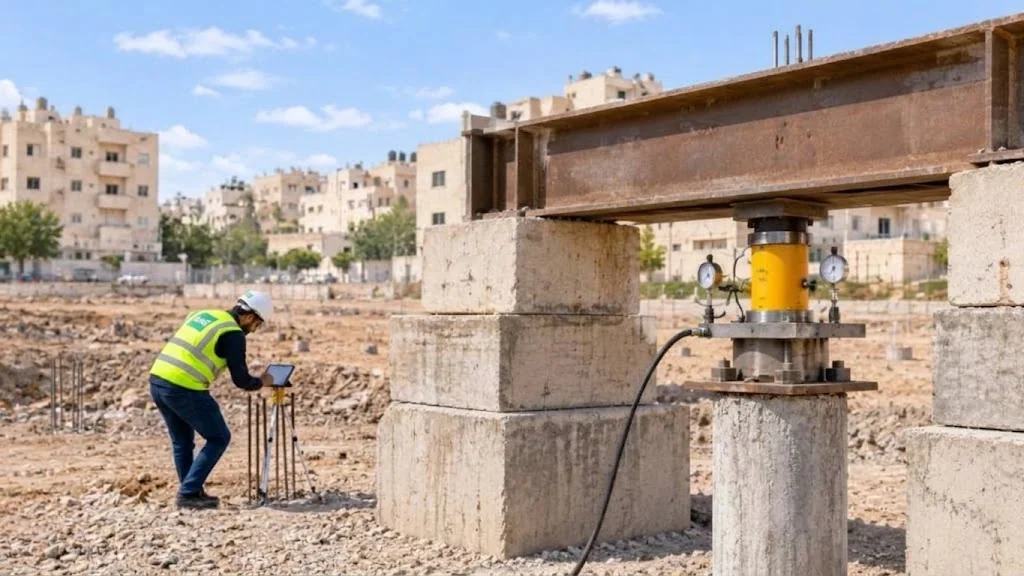
A pile cannot be seen once it is in the ground, so it is checked by testing. On a rail infrastructure project in Abu Dhabi, our 40 piles, 900 mm in diameter and 22 m deep, went through static load testing, pile integrity testing, cross-hole sonic logging and caliper checks of the bores.
Casing, drilling fluid or both
Temporary casing is often enough where only the upper layers are unstable. Where the ground below it would not stand, the bore can be supported by bentonite or polymer drilling fluid, or by casing over a greater depth. The choice depends on the soil, groundwater, nearby structures, and how spoil and used fluid can be handled.
Quality checks during construction
Position and verticality: checked as the casing is installed and as drilling proceeds, against the tolerances in the specification.
Depth and base: the bore depth is measured and compared with the design, the ground is logged, and the base is cleaned before concreting.
Reinforcement: the cage is checked for size, laps and spacers so that it has the required concrete cover.
Concrete: workability is tested on delivery, the tremie stays embedded in fresh concrete, and volumes are compared with the expected pile volume.
Records: a record for each pile keeps these results available for the engineer and for later review.
Risks and how they are managed
Bore collapse: controlled through suitable casing length or drilling fluid, and by concreting without unnecessary delay.
Water inflow: a water-filled bore is concreted by tremie, with the concrete displacing water from the bottom up.
Necking or contamination: the casing is lifted with enough fresh concrete inside it to keep the shaft full and prevent soil or water from entering.
A soft base: loose material at the bottom can reduce end bearing, so the base is cleaned and checked before the cage goes in.
Frequently asked questions
Is the casing always removed?
Temporary casing is extracted as the pile is completed. Permanent casing stays in place where the design requires it, for example through water or very weak ground.
When are bored piles chosen over CFA piles?
Usually for heavier loads, larger diameters, greater depths or rock sockets. Our pile selection guide compares the options.
Where has SAEC used bored piles?
Our bored piling work includes bored piling for oil and gas facilities and bored piling for high-voltage transmission lines in the Al Dhafra region, as well as rail and jetty structures.
Other bored piling work by SAEC includes 157 piles of 800 mm diameter for a jetty at Al Mirfa. Our full range of foundation work is listed under construction and infrastructure services. Need bored piles for your project? Send SAEC your drawings and soil report.
Share this article
If you found this article helpful, share it with others