Flood and Drainage Studies for Reconstruction in Syria
Why reconstruction projects in Syria need flood and drainage studies, what hydrological modelling shows, and how it protects new development.
November 6, 2026
Rebuilding offers a chance to correct old drainage problems, not repeat them. In parts of Syria, water networks are damaged or out of date, while new development can change how rain runs across the land. Research on Syria’s urban water systems expects rainfall to become more variable. Studying water at the start of a project costs far less than correcting a flooded site afterwards.
When a site needs a study
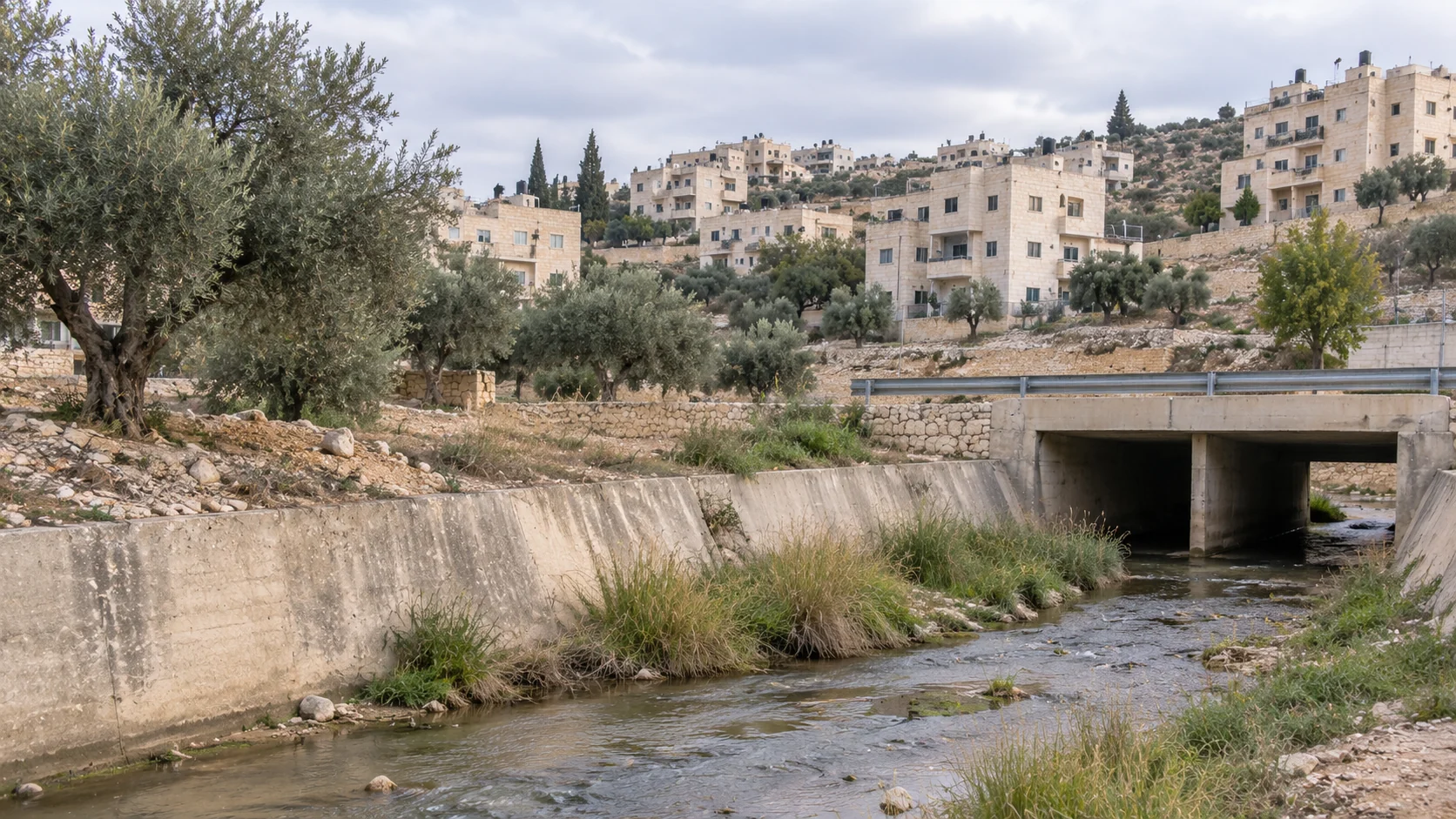
A hydrological study is worth considering when a site lies near a wadi or river, sits below surrounding land or occupies a hillside. It is also important for large developments, schools, hospitals, industrial facilities and infrastructure that must keep operating during storms.
What the study includes
Catchment review: where the water comes from, using terrain data and site observations.
Rainfall analysis: design storms and their return periods, using the best available records.
Hydraulic modelling: how flows move across the site and through channels, roads and pipes, with estimated depths and velocities.
Network review: whether existing stormwater and sewage systems still work and have capacity.
Solutions: site levels, channels, culverts, pumping or infiltration, along with any protection measures.
What it means for an investor
The results can affect finished floor levels, the usable area of a plot, road layouts and the drainage budget. Knowing this at feasibility stage supports a better price and a safer design. It also helps avoid moving the problem onto neighbouring land or a damaged downstream network.
Groundwater is part of the picture
Basements, tanks and deep foundations can meet groundwater, so hydrology and geotechnical work should be read together. Where excavation goes below the water table, dewatering and excavation support have to be planned with care.
Experience we bring
Our hydrology work includes a flood assessment for an energy facility, a mountain assessment at Jebel Jais, a hydrological study for a terminal development in Fujairah and stormwater and outfall design in Abu Dhabi. Those methods can be adapted to Syrian sites using local data and requirements.
Frequently asked questions
What if rainfall records are limited?
Engineers can combine the available records with regional data, terrain models and site evidence, and test how sensitive the design is to those assumptions.
Does a small plot need a study?
Not always. A simple drainage review may be enough, unless the plot is low-lying or receives water from surrounding land.
When should the study happen?
Before the layout and levels are fixed, since those are the decisions it influences most.
Planning a development in Syria? Contact Super Arc Group to discuss flood and drainage risk on your site.
Share this article
If you found this article helpful, share it with others