Assessing Damaged Buildings in Syria: Repair or Rebuild?
How engineers assess damaged buildings in Syria, what the tests show, and how owners and investors can decide whether to repair, strengthen or rebuild.
November 6, 2026
Across Syria, owners, companies and investors are deciding whether damaged buildings can be saved. The World Bank estimates reconstruction costs at about $216 billion, including $108 billion in direct physical damage. For a single property the question is more practical: is this building worth repairing? A sound answer depends on engineering evidence, because appearance alone can mislead in both directions.
Start with safety
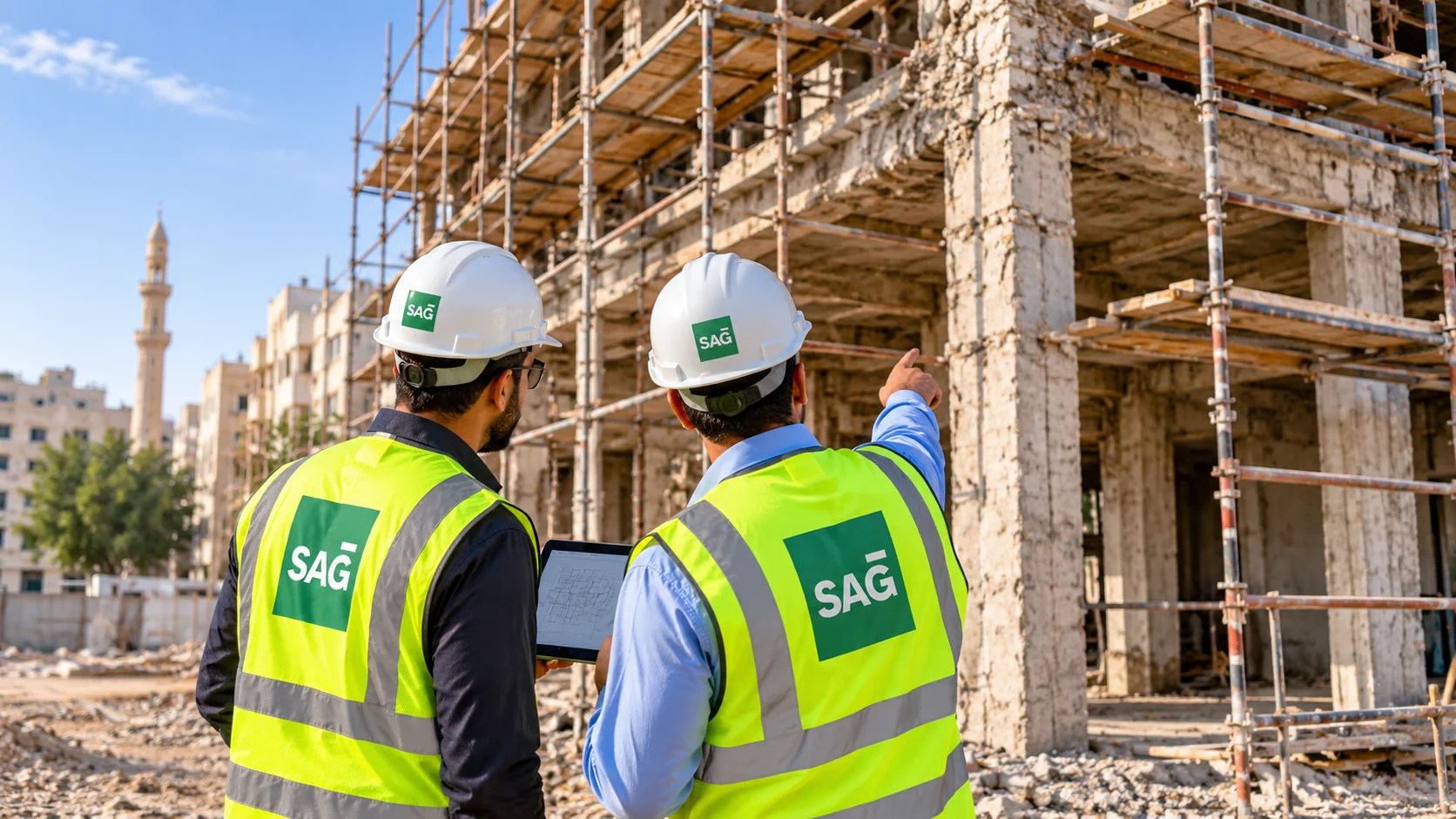
Damaged structures can be unstable, so access has to be controlled from the first visit. Engineers look for partial collapse, loose elements and heavily cracked columns, and may recommend temporary propping before anyone works inside. Where a site could contain unexploded ordnance, authorised specialists must clear it before any intrusive survey or excavation.
What a structural assessment covers
Records and history: available drawings, the original use of the building, later alterations and what happened to it.
Damage mapping: a floor-by-floor record of cracks, spalling, deflection, corrosion and water damage, separating surface defects from structural ones.
Material testing: rebound hammer and ultrasonic pulse velocity checks on concrete, cover and reinforcement surveys, cores for compressive strength, and carbonation, chloride and half-cell potential tests where durability is a concern.
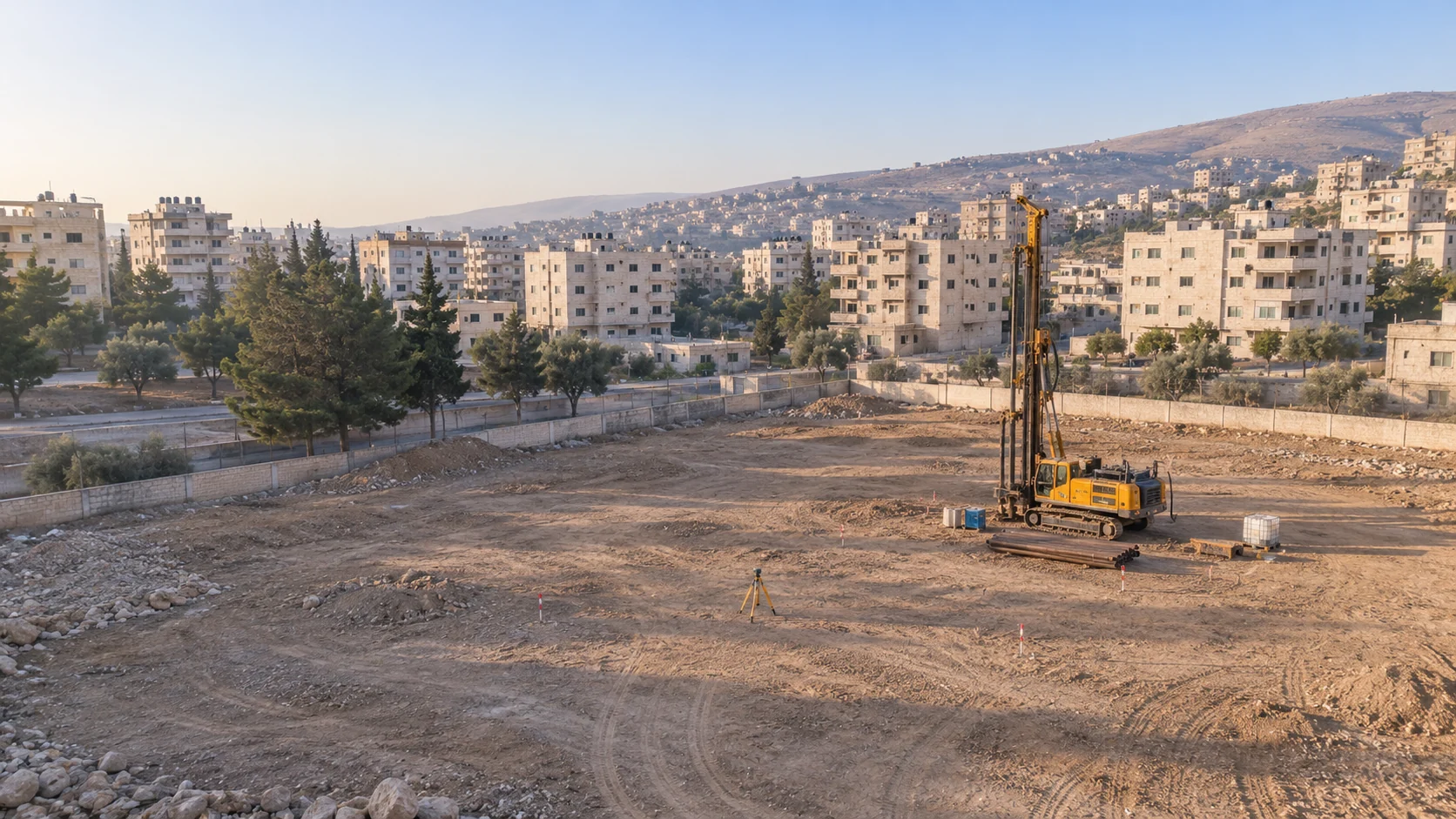
Foundations and ground: settlement can be hidden behind wall cracks, so the assessment may need boreholes and a geotechnical review.
Structural analysis: a model checks whether the building can carry its existing and proposed loads, including earthquake effects. The February 2023 earthquakes caused an estimated $5.1 billion of direct damage in Syria, which makes seismic review an important part of any decision.
Repair, strengthen or rebuild
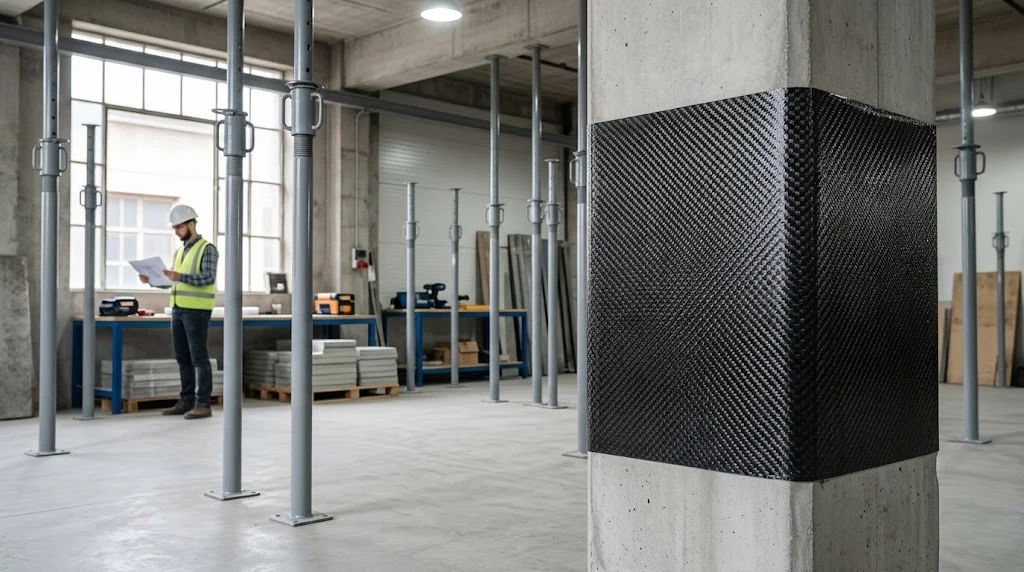
Repair suits buildings whose structural system is sound and whose damage is local. Strengthening suits buildings that need added capacity, for example jacketing columns or stiffening the frame. Rebuilding becomes the better option when damage is widespread, materials have lost too much strength, or strengthening would cost too much for the value recovered.
The decision should compare cost, programme, usable area and remaining life. A building that looks badly damaged can sometimes be saved at reasonable cost, while one that looks intact may have a problem that makes reuse unwise.
What an investor should expect from the report
A useful report gives a clear conclusion for each part of the building, with test results, photographs, marked-up drawings, repair options and a preliminary scope that can be priced. That turns an uncertain asset into something an investor can compare and budget.
How we apply this experience
Our engineers have carried out assessments such as a full facility condition assessment at an island resort, a condition assessment of Olgana Tower and an investigation of the Boulevard car park in Dubai. Super Arc Group brings that method to Syrian projects through its team in Hama and its engineers in the UAE.
Frequently asked questions
Can a building be assessed without its original drawings?
Yes. Engineers can measure the structure, locate reinforcement and prepare as-built drawings, although this adds time and some testing.
How many tests does a building need?
It depends on its size, condition and intended use. The engineer normally sets the programme after a first inspection, focusing on critical elements.
Does an assessment replace permits?
No. It supports the design and the decision, while permits and approvals must still follow the requirements of the relevant Syrian authorities.
Own or plan to invest in a damaged building in Syria? Contact Super Arc Group to discuss an assessment.
Share this article
If you found this article helpful, share it with others