Strengthening Existing Buildings in Syria Instead of Rebuilding
When strengthening an existing building in Syria makes more sense than rebuilding, the main methods, and how to keep a property working during repairs.
November 6, 2026
Not every damaged or ageing building needs to be demolished. Where the structure can be made safe, strengthening can save existing floor area and help an owner return a property to use sooner. In Syria, where many owners and investors are weighing the cost of reconstruction, that option deserves a careful technical look before any demolition decision.
When strengthening makes sense
The case is strongest when the building has a sound overall form, damage is limited to identifiable elements, and the future use suits the layout. A structural assessment comes first, because strengthening without understanding the cause can hide a problem or move it elsewhere.
Common strengthening methods
Concrete or steel jacketing: adds capacity and confinement to columns, usually by enlarging the section or wrapping it in steel.
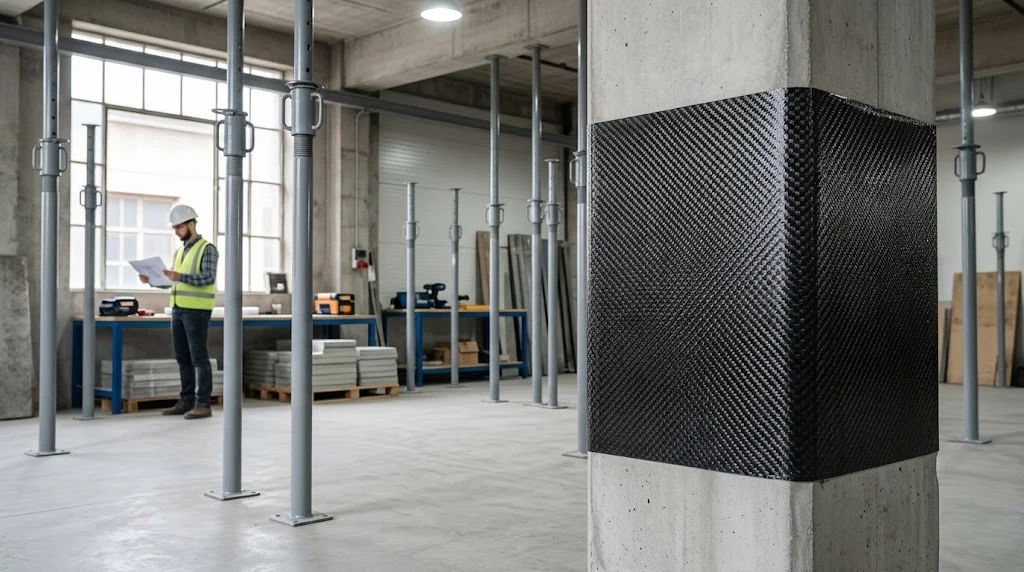
Fibre-reinforced polymer (FRP): bonded sheets or strips can strengthen beams, slabs and columns with little added weight.
Crack and concrete repair: injection and patch repairs restore sections, combined with treatment of any corrosion.
Added walls or bracing: can improve lateral stiffness and earthquake resistance.
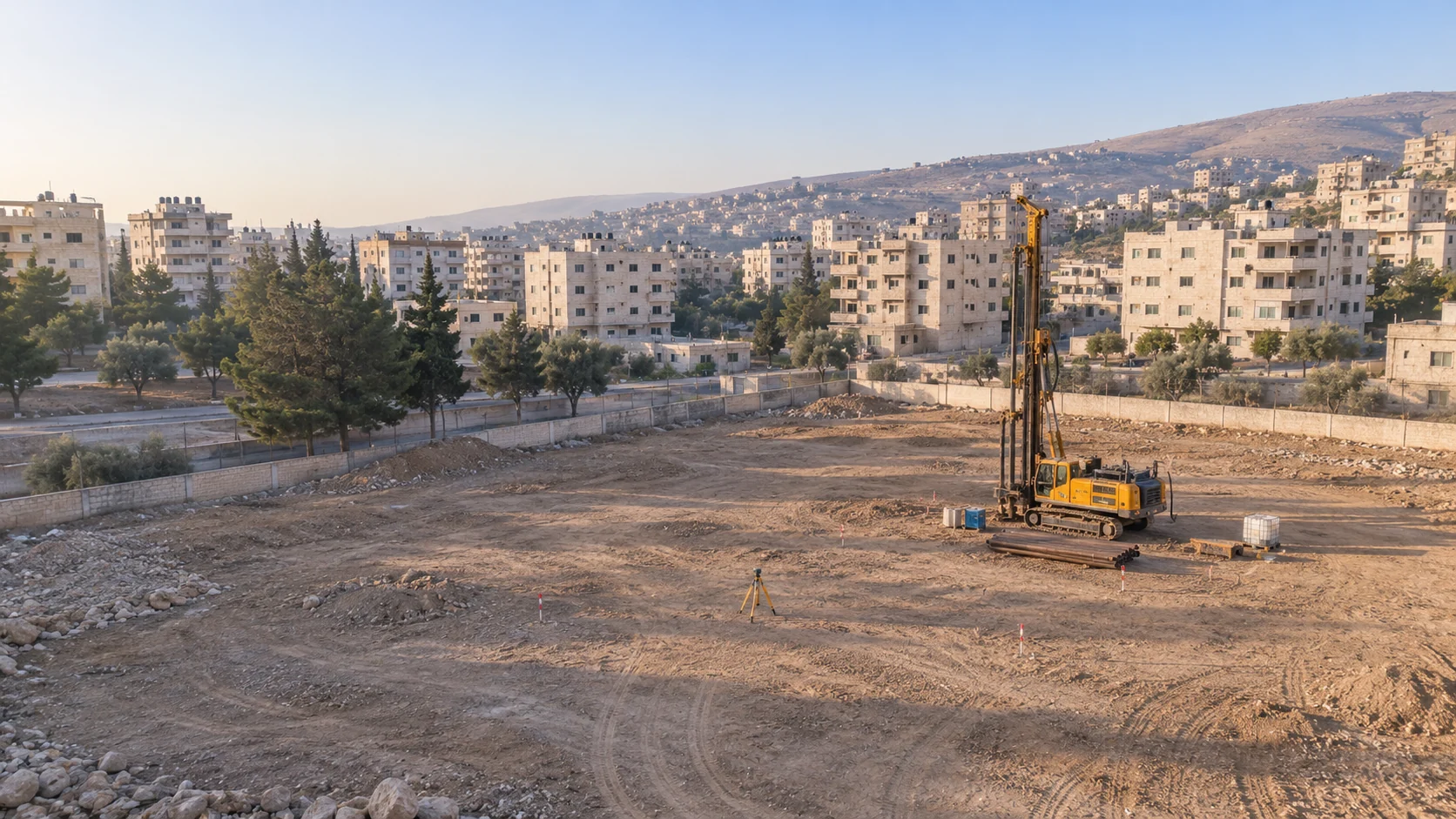
Foundation work: underpinning, micropiles or grouting may be needed if settlement or added loads affect the foundations.
Repairing while a building is in use
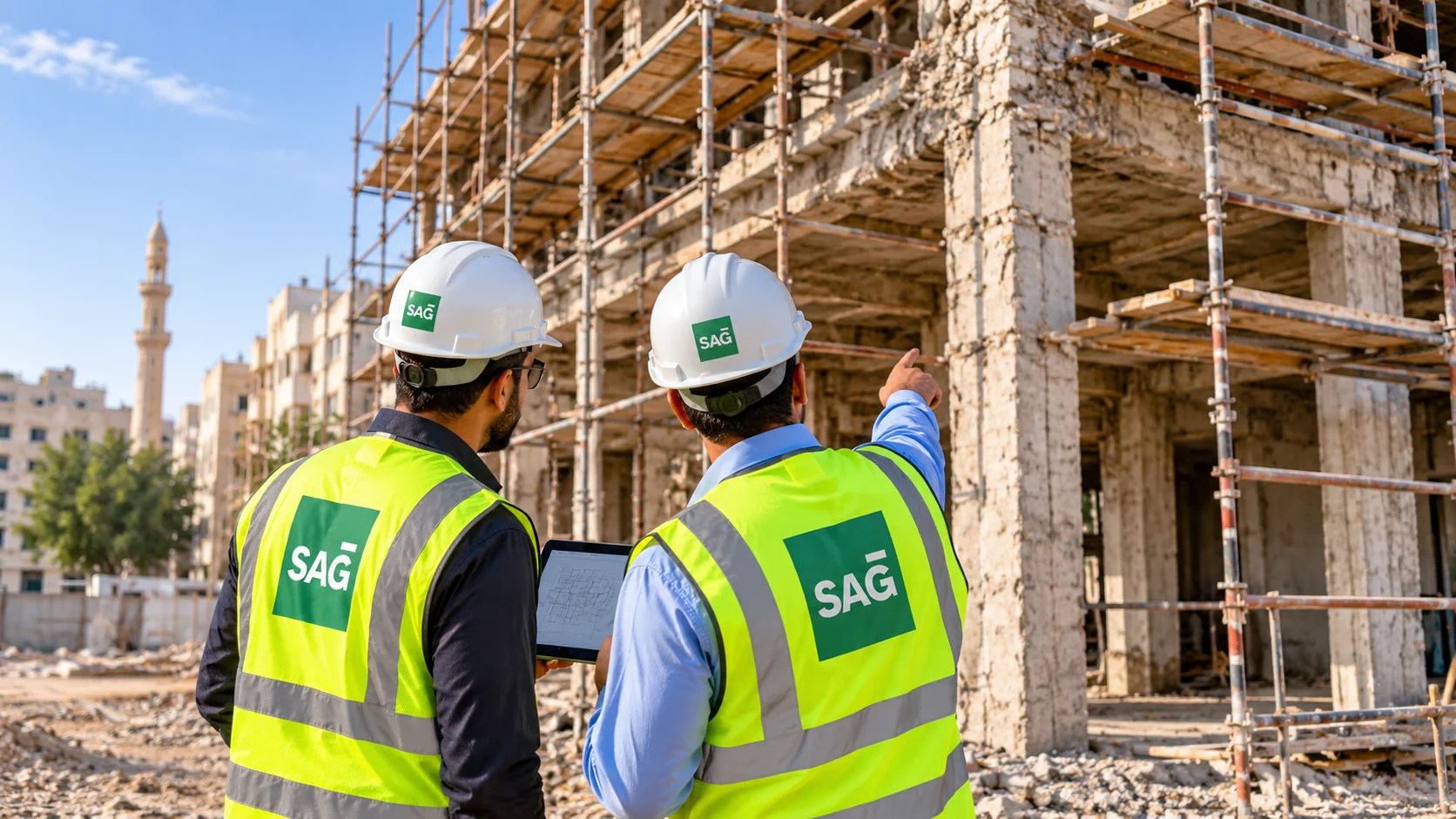
Some properties need to keep operating. Work can then be phased by floor or zone, with temporary support, controlled access, and noise and dust limits. Structural and MEP surveys should go together, as hidden services can affect the repair and the repair can disrupt services.
How to judge the value
Compare the total cost of strengthening with demolition and rebuilding, then consider the programme, the usable area kept, the remaining life and the future value. Design must also address current requirements, including earthquake resistance, and the works need the relevant approvals.
Project experience
SAC strengthened and repaired Al Samman Tower in Abu Dhabi while it stayed occupied. Our work also includes a basement assessment at Roda Tower and the rehabilitation of a villa in Khalifa City. Through our team in Hama, we offer the same engineering approach to owners and investors in Syria.
Frequently asked questions
Is strengthening always cheaper than rebuilding?
No. It depends on the extent of damage, access and the required performance. An assessment and a priced scope allow a fair comparison.
Can residents stay during the works?
Sometimes, if the engineer confirms that it is safe and the work can be phased. Heavily damaged areas should stay closed until they are made safe.
Can strengthening improve earthquake performance?
It can, but it requires a specific analysis and design. Repairing visible damage alone does not automatically improve seismic performance.
Thinking about reusing an existing building in Syria? Contact Super Arc Group to review your options.
Share this article
If you found this article helpful, share it with others