Before Drilling a Water Well in Abu Dhabi: Site Assessment, Permits and Testing
From water demand and site assessment to permits, performance tests and water quality: prepare a clearer brief before discussing water well drilling in Abu Dhabi.
November 17, 2026
Is choosing a well location and an expected depth enough before drilling begins? No. Water well drilling in Abu Dhabi starts with the intended use and demand, the groundwater setting and the site’s regulatory position, followed by an agreed design, testing and handover scope. Depth alone does not establish a suitable quantity or quality of water.
Define the project’s water requirement first
Explain whether the water is intended for irrigation, an industrial process or another service use. Discuss demand, operating patterns, seasonal variation, quality requirements and potential storage or treatment with the relevant specialist. There is no single daily consumption figure suitable for every well project.
A clear requirement helps the team assess a well against other available supply options and identify the questions that should be answered before committing to an execution scope.
Review the site and available hydrogeological information
Hydrogeology concerns the occurrence and movement of groundwater within geological formations. An initial review considers available information on the land, strata, water levels and water quality, together with earlier well records where available. The age and relevance of those records matter.
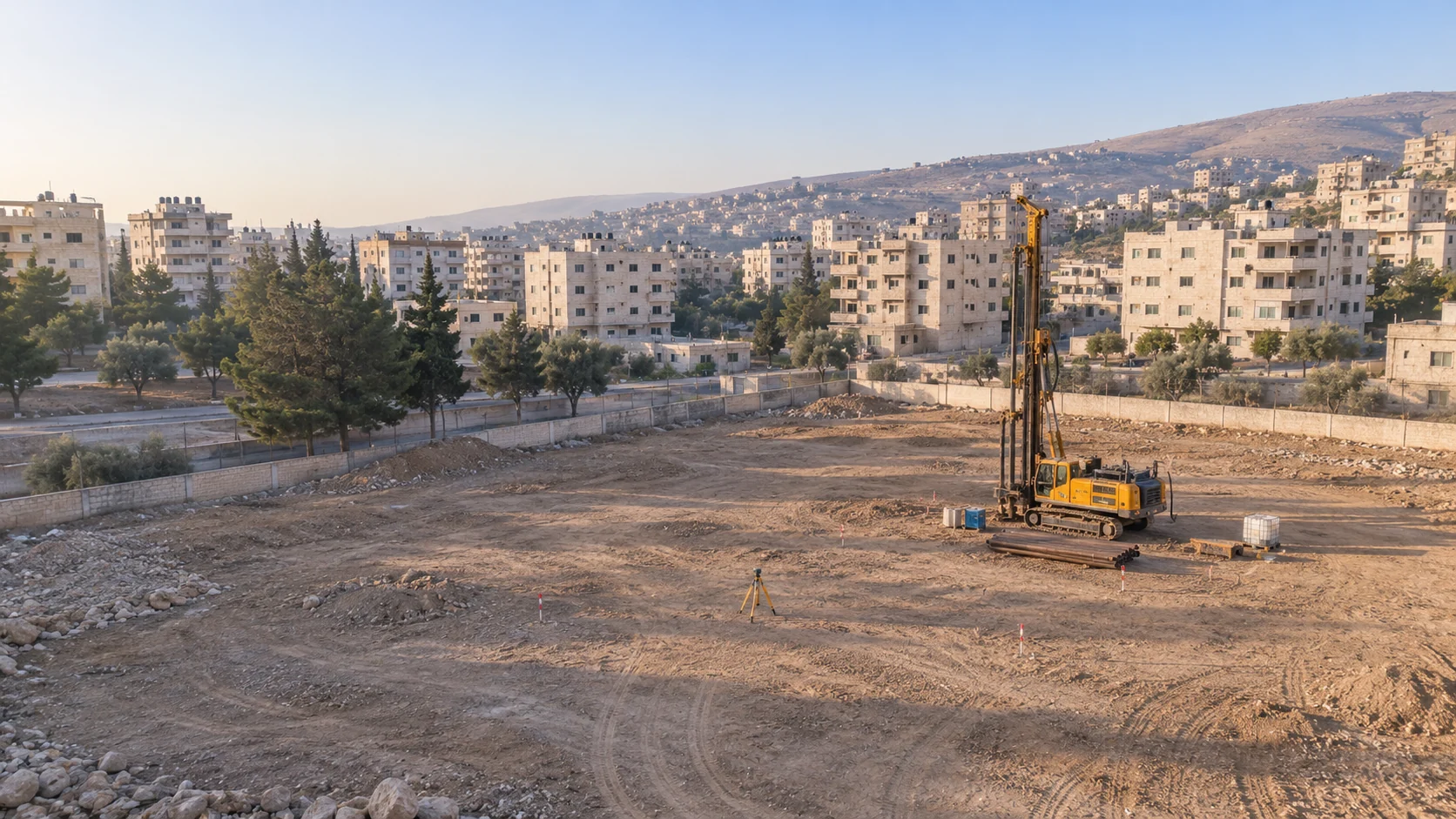
A neighbouring well provides evidence to investigate, rather than a guarantee of the new well’s results. A specialist identifies information gaps and any further assessment needed. Access for the rig, existing services, adjacent structures and site constraints also belong in the discussion. An expected depth or target yield should not be presented as a confirmed outcome before suitable assessment and testing.
Check site eligibility and permits before drilling
On 11 April 2025, Abu Dhabi Media Office announced an Environment Agency – Abu Dhabi resolution prohibiting new groundwater wells in designated areas. This is not an emirate-wide ban, and the announcement does not determine whether an individual plot is eligible. The location and applicable process must be checked with the competent authority.
The Abu Dhabi occupational safety and health code for water well construction, CoP 46.1, also requires the necessary approvals before work starts and a contractor licensed for the work and drilling method. Confirm the project’s current licensing requirements and conditions, and who will handle submissions. These are early checks, not a complete official application checklist or a substitute for the authority’s process.
What should you prepare for a drilling enquiry?
- Land location, boundaries, project description and intended water use.
- Expected operating demand and its basis, identifying preliminary estimates.
- Available studies, layouts, earlier well records and water analyses.
- Permit status, authority correspondence and known site restrictions.
- Equipment access, working space and information on existing services.
- Questions to resolve: investigation feasibility, testing scope and handover requirements.
This is a practical enquiry checklist, not a mandatory government licensing file.
Compare the scope before comparing the drilling price
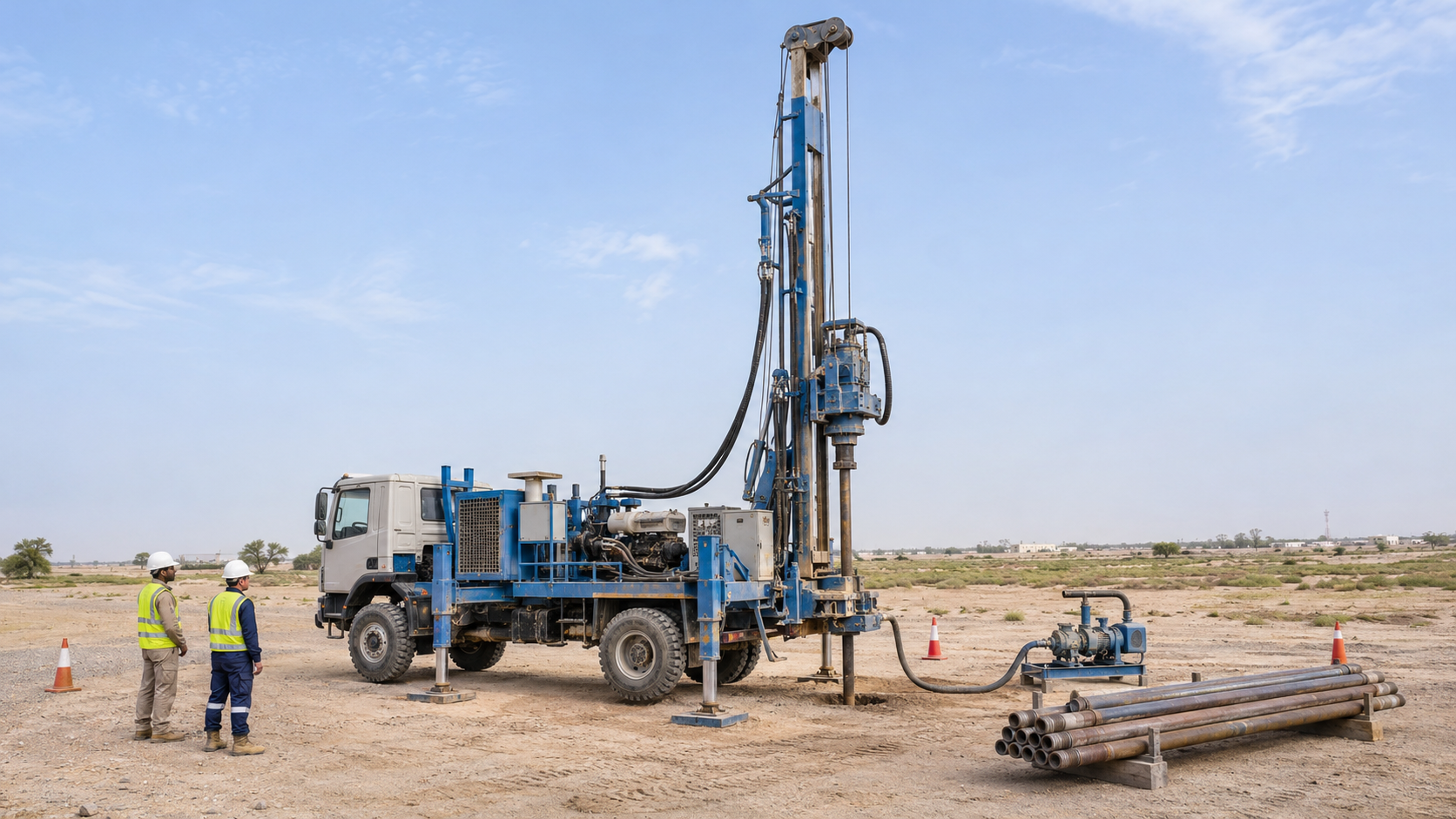
Ask what the proposal includes: drilling, supporting works, well completion and development, casing and screens where required by the design, and any pump or connections included in the appointment. Distinguish execution from specialist assessment, laboratory analysis and regulatory coordination.
Identify the responsibilities of the owner, specialist, contractor and laboratory, including management of drilling waste and test water. Agree stage deliverables and how changes will be approved if actual conditions differ from assumptions. A price per metre alone does not reveal differences in equipment, tests, exclusions and handover documents.
Well performance and water quality answer different questions
Performance under operating conditions
A specialist defines a suitable test programme to assess the well’s response to pumping, using information such as discharge rate, water-level change and recovery after pumping stops. USGS pumping-test data illustrate these types of measurements. Results need interpretation within the test conditions; a short-term reading is not a guarantee of constant long-term production.
Quality and fitness for the intended use
Quality assessment requires suitable sampling, analysis and interpretation against the intended use and applicable standards. The USGS groundwater sampling reference illustrates that sample collection, field measurements and laboratory analysis have their own technical arrangements.
Assessment may address salinity and chemical or microbial indicators according to use and risk. The WHO Guidelines for drinking-water quality provide a general technical framework, rather than replacing local requirements. A successful pumping test does not prove drinking-water safety. Suitability for irrigation likewise requires specialist assessment of the results and intended application.
What should you review at handover?
Agree the handover package at the start. Depending on the project and permit, discuss:
- The well location record, drilling log and documented formations.
- As-built construction and installed equipment details.
- Performance-test reports, including conditions, readings and specialist interpretation.
- Sampling and laboratory reports identifying the sample, date and analysing organisation.
- Operating and maintenance information, limitations and follow-up actions.
- Authority documentation required by the project’s conditions.
A statement that the well “passed testing” is insufficient on its own. Check that the results identify the relevant well and explain both the conclusions and any unresolved matters.
Planning mistakes to avoid
- Assuming the required supply is guaranteed: turn yield expectations into assessment and testing questions.
- Leaving permits until later: establish the site’s position before arranging the start of works.
- Confusing quantity with quality: define performance testing and quality analysis separately.
- Comparing unequal offers: check equipment, deliverables and exclusions.
- Leaving tests and handover unassigned: name the responsible parties in the appointment scope.
Specialist experience and the Al Shallal partnership
Specialist input helps identify required information, coordinate the work and interpret results within each party’s expertise. The Al Shallal company profile identifies the business as a strategic partner of Super Arc Group. Its listed services include water well drilling, testing and maintenance across the UAE and the Gulf.
This relationship provides a route to discuss well requirements with the group. Work at an individual site and the available service scope remain subject to assessment and applicable requirements and approvals.
Frequently asked questions
Can a water well be drilled anywhere in Abu Dhabi?
That should not be assumed. Designated areas are subject to the prohibition, and site eligibility and permits need official verification before drilling.
Do neighbouring wells determine a new well’s yield?
Their records inform an initial assessment but do not establish the new well’s result. A specialist reviews how representative they are and whether further investigation and tests are needed.
Is a pumping test enough to assess water quality?
No. Performance testing and quality analysis are different scopes. Fitness for use requires appropriate sample results, analysis and interpretation.
When should I request a hydrogeological assessment?
Discuss it early, particularly where information is incomplete, the source’s potential is uncertain or operating demand calls for a broader assessment. The specialist defines the appropriate scope.
Start with verification before arranging drilling
The first question is whether the location and groundwater source can serve the project’s needs within the applicable requirements. Contact Super Arc Group to discuss your water well project requirements. Share the location, intended use, available information and permit status to begin defining the service scope with the relevant team.
Share this article
If you found this article helpful, share it with others