Before Investing in Greenhouses in Syria: Site, Water, Energy and Operating Costs Checklist
Before buying a greenhouse, check whether the site, water and power can support the crop and selling window. Compare structures, operating costs and financial risks.
November 28, 2026
A landowner near Hama comparing quotes for greenhouse frames and covers may find that the cheapest structure needs extra equipment in the intended growing season. A pump may be unavailable when the crop needs water, or the first buyer payment may arrive after wages and seedlings are due. Before buying a structure, assess the site, crop, water, power and routes to market.
To evaluate a greenhouse investment in Syria, start with the intended selling window and work back to the growing conditions and resources needed to meet it. Compare each supplier’s offer alongside the costs of running the greenhouse for a full crop cycle.
How does protected cultivation differ from open-field growing?
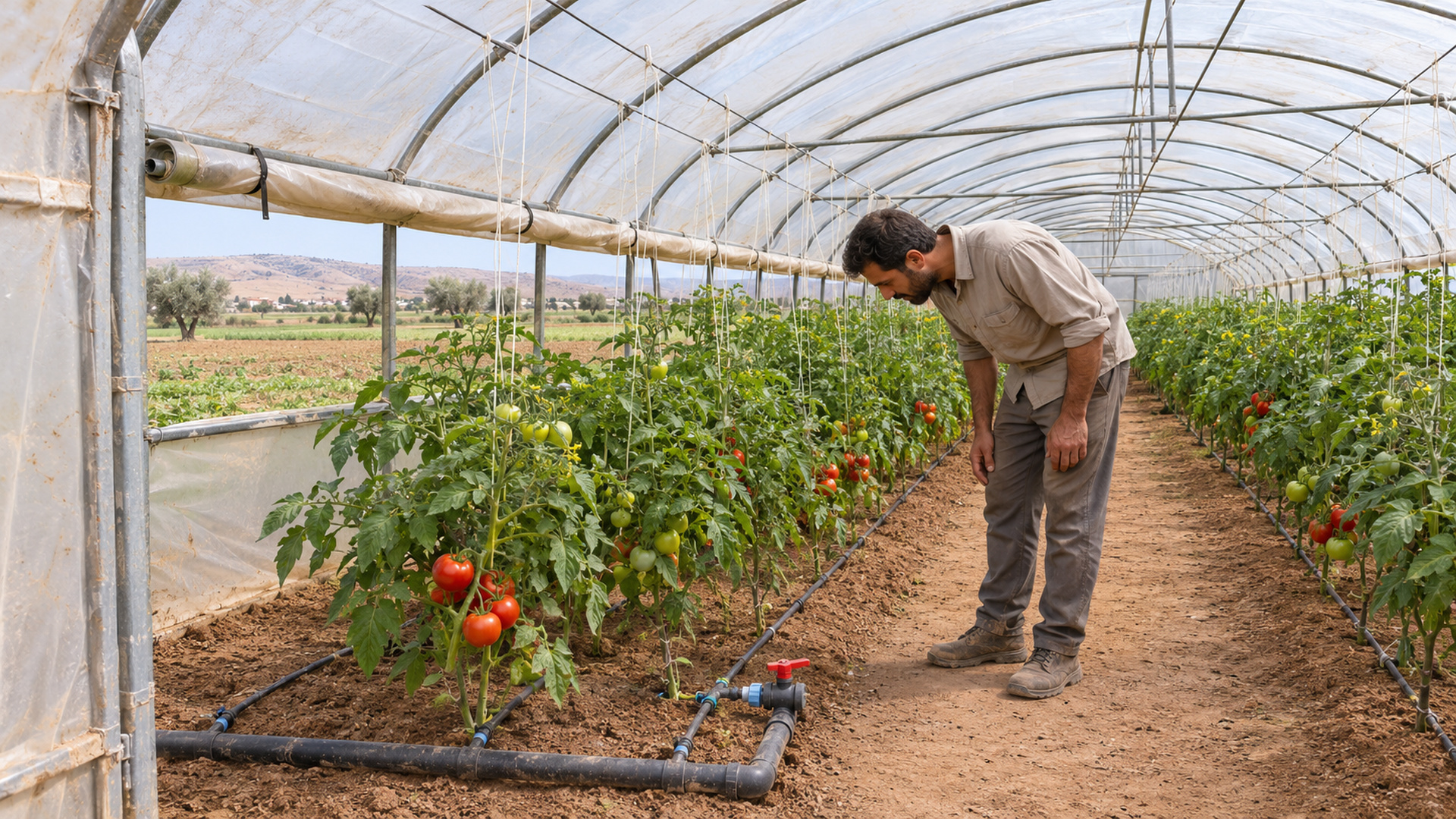
A cover gives some protection from direct rain and wind. Vents, shading and active equipment can help manage growing conditions, to an extent that varies with the design. Heat can still build up quickly, and condensation requires attention. Assess those risks against the needs of the crop and the months you plan to grow it. FAO guide to greenhouse vegetable crops in Mediterranean climate areas.
How do you choose a greenhouse site?
Check slope, ponding after rain and where runoff will drain from structures and service tracks. For soil-grown crops, assess the soil and drainage. For substrate systems, check the ground levels and how the structure will be anchored. Where flooding is possible, look beyond the plot for runoff paths.
Record prevailing winds and exposure to gusts. Consider ventilation, light and terrain when reviewing orientation with the designer. Allow room for maintenance, moving inputs and loading produce, and check road access during the selling season. Confirm land-use rights, utility connections and local requirements before committing to a layout. See also SAG’s guide to assessing farmland in Syria.
Which greenhouse type suits the project?
- Crop tunnels offer varying protection depending on their height and cover. Access and ventilation can be limited.
- Single-span plastic-covered houses can use natural ventilation if the design suits the site and growing season.
- Multi-span greenhouses provide contiguous working space and require attention to airflow, roof drainage and structural loads.
- Higher-control facilities can regulate conditions more closely and carry greater energy and maintenance needs.
Compare weather resistance, expected cover life, replacement cost and parts availability. Select equipment for the crop and selling window you intend to serve.
Is the water source suitable?
Confirm actual supply at peak demand and when it is available. Test a representative sample and interpret salinity and other relevant indicators for the crop, irrigation system and growing medium. If a well’s yield is falling, check its performance before setting the planted area. FAO irrigation water quality guidance and SAG guide to declining well yield.
Check water distribution across irrigation zones, filtration, maintenance access and storage for interruptions. Track use and growing-medium moisture through the crop cycle. Look for leaks or uneven delivery before increasing irrigation time. FAO irrigation water management.
What role does energy play?
List the loads for pumping, ventilation, controls, and heating or cooling where the crop and season justify them. Record operating hours and identify equipment that must keep working during an outage. Natural ventilation may be adequate in some seasons and conditions.
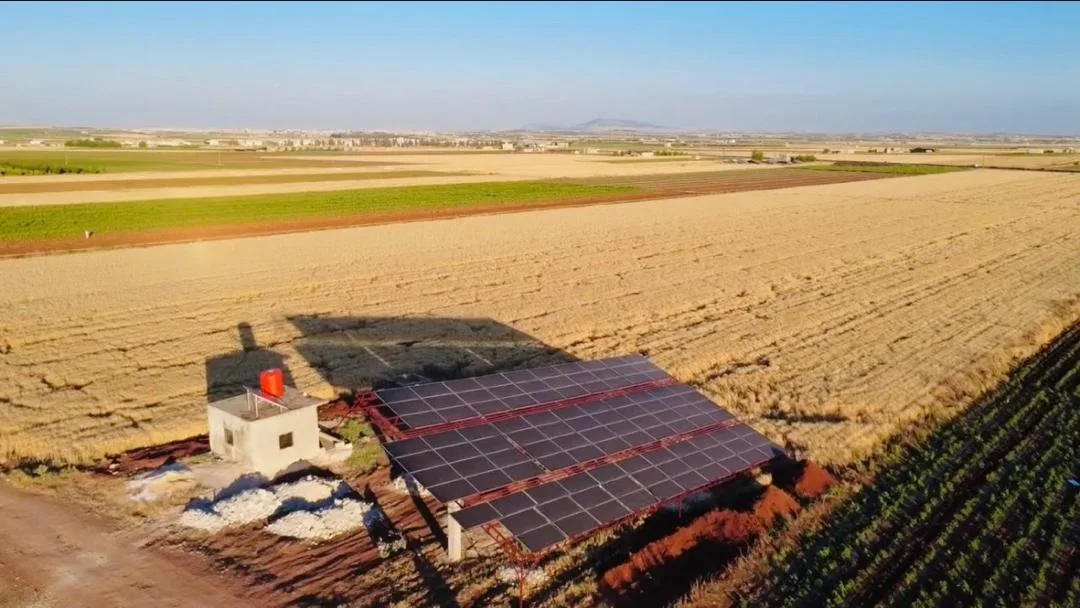
Assess solar power against the load profile, daylight hours, storage and backup options. Water storage can help decouple daytime pumping from irrigation timing. Night-time electrical loads require their own supply assessment. An example of solar irrigation in Hama.
How do you choose the crop?
Compare tomatoes, cucumbers or peppers by season, water demand, heat sensitivity, access to seedlings and inputs, and the team’s experience. Consider crop-cycle length, harvest frequency, grading and packing. Ask buyers what varieties, volumes and delivery dates they need, and whether the project can maintain quality in transport or storage. FAO horticulture management factsheets.
Managing the greenhouse climate
Monitor temperature and humidity in the crop zone and record condensation or persistent leaf wetness. Use natural vents where conditions allow and assess fans if the design cannot provide enough airflow. Check humidity around dawn and after irrigation, when wet leaves and condensation can favour some diseases. Set operating ranges with an agronomist for the crop and its growth stage. FAO guidance on the greenhouse climate.
Pests, diseases and maintenance
Start integrated pest management with hygiene, incoming seedling checks, regular scouting and records of where problems appear. Schedule preventive checks for covers, screens, vents and irrigation uniformity, and assign responsibility for faults. Compare climate, irrigation and crop records to identify recurring problems.
How do you calculate costs?
Capital expenditure (CAPEX)
Include ground preparation and drainage, frame, cover, installation, irrigation, power equipment, ventilation, controls and service facilities as applicable. Account for work excluded from supplier quotes.
Operating expenditure (OPEX)
Budget for labour, seedlings or seeds, water, energy, nutrients, pest management, maintenance, packing, transport and marketing. Allow for waste handling where relevant and deduct unsaleable produce from projected sales volume. Schedule cover and equipment replacements in the cash-flow plan.
How do you assess financial feasibility?
Estimate revenue as marketable output × expected selling price, using separate grades where relevant. Distinguish fixed and variable costs. Estimate the break-even price by dividing the costs to be covered by expected saleable units. Include an appropriate share of asset depreciation for an economic break-even estimate.
Test a base case and a downside case with lower prices or marketable output, higher input costs, or water or power interruptions. Time payments and receipts to estimate cash needed before buyers pay. Build the budget from local quotes and data on the site, crop and buyers. FAO in Syria and University of Maryland Extension on enterprise budgeting.
Is a pilot worthwhile?
A manageable trial can test irrigation uniformity, energy use, indoor climate, marketable yield and delivery to buyers. Define the measurements before planting. Consider seasonal differences and scale-up costs before using the results to justify expansion.
Pre-investment checklist
- Site, land-use rights and relevant permissions.
- Soil or substrate, drainage, wind, access and expansion space.
- Water availability, quality, irrigation and power reliability.
- Structure, crop, team experience and maintenance plan.
- Market, packing, transport, capital and operating costs, and downside scenarios.
Where Super Arc Agriculture fits
Super Arc Agriculture describes its agricultural investment work with landowners and investors, from soil preparation and irrigation to harvest and sale. To discuss greenhouse project readiness and available support, contact Super Arc Group with the location, season and crop.
Frequently asked questions
Is protected cultivation always more profitable?
Profit depends on selling price, marketable output and capital and operating costs.
Can solar energy power a greenhouse?
Assess load timing, storage and backup power first.
Is every plot suitable?
Assess drainage, wind, access, utilities and land-use rights.
Why test irrigation water?
To assess compatibility with the crop and growing medium.
How do capital and operating costs differ?
Capital expenditure installs the assets. Operating costs cover recurring production, maintenance and marketing.
Should you choose the crop before buying the structure?
Shortlist crops and seasons first to assess ventilation, irrigation and working space.
When should you consider expanding?
When operating and sales data show that water, energy, staff and buyers can support more production.
Share this article
If you found this article helpful, share it with others