Before Investing in Agricultural Land in Syria: Soil, Water, Irrigation and Energy Checklist
A guide for landowners and investors assessing farmland in Syria. Check soil, water and energy, compare irrigation methods, and budget for the crop from planting to sale.
November 21, 2026
Before ordering seed or buying a pump, check how much water will reach the crop at peak demand, what it will cost to deliver and where you can sell the harvest. For idle land, the first expense may be repairing drainage or restoring access.
If you are planning an agricultural investment in Syria, including from abroad, use these checks to establish what the site can support before committing funds.
1. Assess the land for the intended crop
Walk the boundaries and check slope, drainage and access for trucks during wet weather and harvest. Ask what was grown, how the field was irrigated and how long it has been out of production. Make a list of pumps, tanks, canals and pipelines, with a note on which ones need testing or repair.
Ask an agronomist to set sampling locations and depths based on differences within the field, its history and the crops under consideration. Texture, effective rooting depth, pH and salinity may all affect suitability. Look for compaction and poor drainage during the field visit. Use the findings to decide which repairs are needed before planting and which can wait. FAO — Principles of land evaluation.
2. Check water availability at peak demand
Identify the source and check its flow under operating conditions. For a shared canal or network, estimate the volume you can receive during your irrigation turn. Compare reliable supply with crop demand during the driest or most demanding weeks, accounting for the local climate, planting dates and the contribution of rainfall. If supply falls short, assess a smaller planted area, different planting dates or another crop.
Test a representative water sample. Interpret salinity and sodium results in light of the crop's tolerance, soil properties and drainage. Confirm the source's status and conditions of use with the relevant local authority. For a proposed well or changes to an existing source, check the applicable local and technical requirements before proceeding. FAO — Water quality for agriculture.
FAO's work in Syria includes restoring access to irrigation water. In Eastern Ghouta, an agricultural recovery project included rehabilitating a well and adding solar-powered pumping. The suitability of a similar investment depends on the farm's own water source, distribution network and crop requirements. FAO — Restoring agriculture in Eastern Ghouta.
3. Choose an irrigation system you can maintain
- Drip irrigation delivers water close to the roots. Budget for filtration, flushing and replacement of lines and emitters.
- Sprinklers can suit different crop layouts. Check operating pressure, the pump's ability to serve each irrigation zone and the effect of wind on uniformity.
- Surface irrigation may be practical where slope, infiltration, drainage and supply are suitable. Include land levelling, labour and channel maintenance in the comparison.
Map the irrigation zones, pipe routes and valves. Check distribution uniformity at commissioning and record relevant pressure or flow readings so the team can spot leaks or blockages later. FAO — Choosing an irrigation method.
4. Size the pumping load before comparing energy options
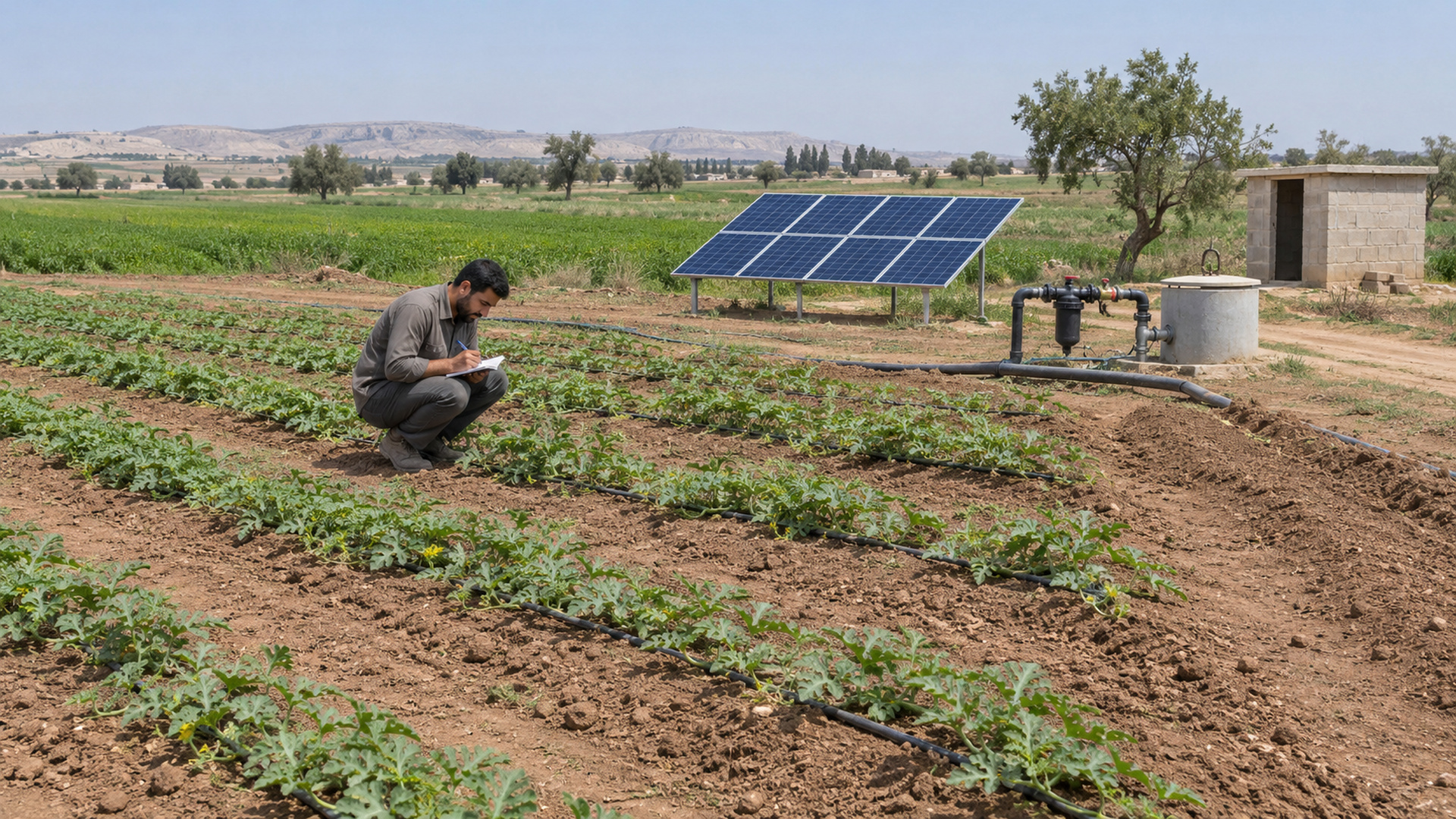
Estimate peak daily water volume, available pumping hours, flow rate and total head, including elevation, pipe losses and the pressure the irrigation system needs. List any equipment that will run alongside the pump. Where sunshine and irrigation schedules differ, assess water storage or a backup source.
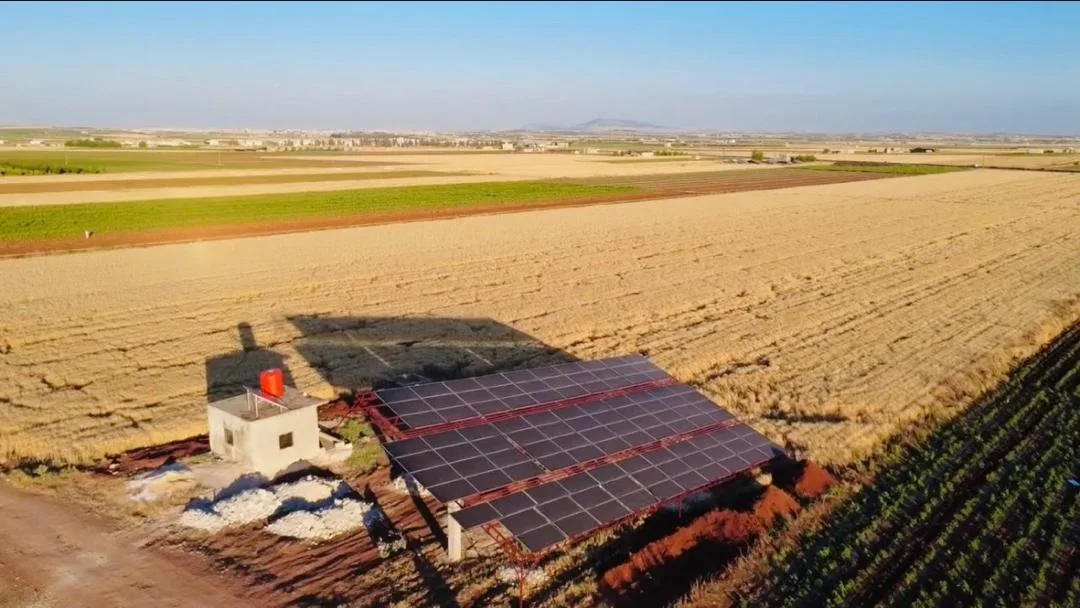
Compare installation, energy, servicing and replacement costs over the same operating period for solar, grid power, fuel or a combination. Keep pumping within the reliable supply of the source. The group's Hama fields offer a local example of multiple irrigation methods in use. Solar-powered irrigation on our land in Hama and FAO — Solar-powered irrigation systems.
5. Test crop economics through to the sale
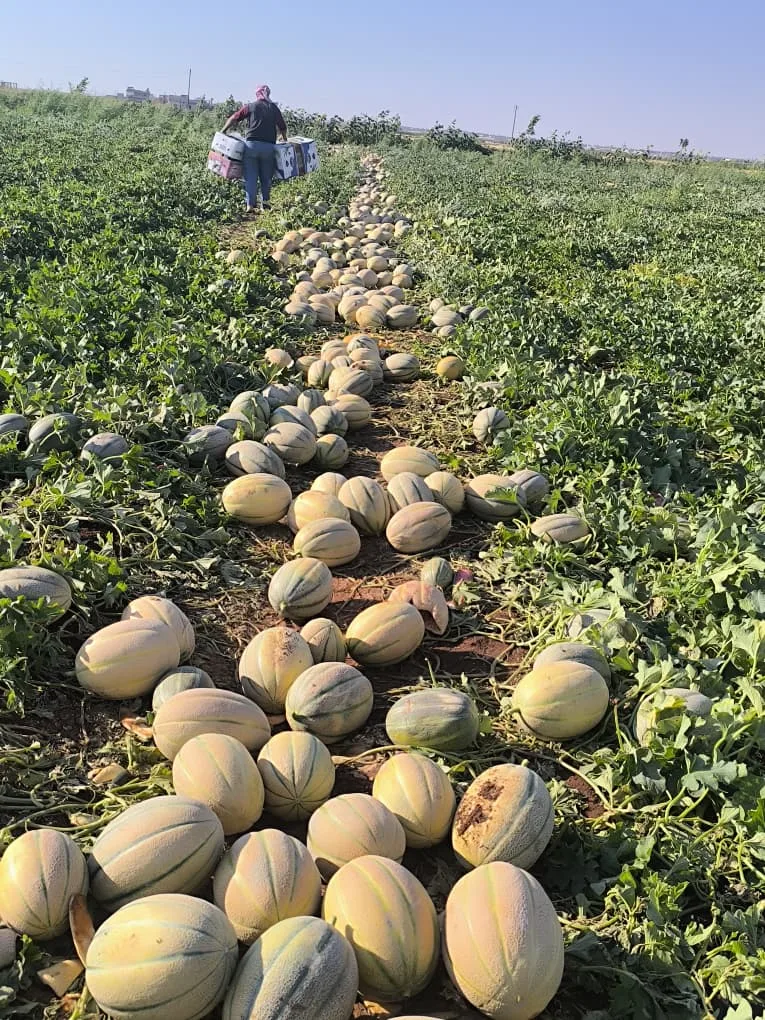
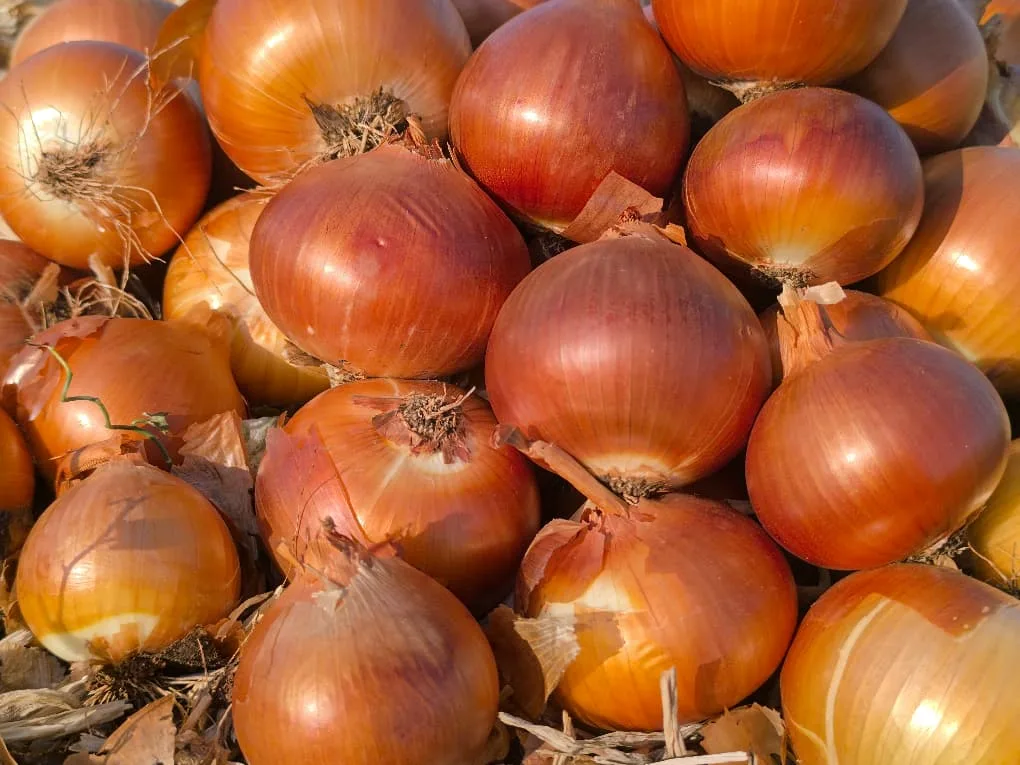
Shortlist crops that fit the site and growing season. Separate one-time rehabilitation from recurring costs such as seed, fertiliser, labour, energy, harvest, grading and packing. Check likely buyers in Syria, their delivery windows and quality requirements, and what transport, storage or cooling would cost. Allow for the time between paying for production and receiving sales proceeds.
Budget for a typical season and test what happens if sale prices fall, inputs get more expensive, marketable yield drops or water is less reliable. Estimate the break-even price by dividing the costs you need to recover by the volume you expect to sell. If the downside is hard to absorb, compare a smaller first planting with deferring some capital spending.
6. Plan who will manage the farm after planting
Assign responsibility for irrigation, soil and crop checks, and equipment servicing. Log watering dates, volumes where measurable, breakdowns, inputs and labour by field or crop. Investigate standing water or uneven growth early. Before harvest, arrange workers, packaging, transport and buyer collection. Compare actual spending and sales with the budget when planning the next season. FAO in Syria — Water management, farming skills and marketing.
7. Where Super Arc Agriculture can help
Super Arc Agriculture, part of Super Arc Group, invests in agriculture in Syria and farms land in Hama. Its company page describes work with landowners and investors and farm operations ranging from soil preparation and irrigation to harvest. A preliminary assessment can help both sides discuss development priorities and agree which parts of the operation need support. Super Arc Agriculture.
What information should you prepare before discussing your project?
- Governorate, locality, land area and a location pin or map if available.
- Previous land use and the condition of existing equipment.
- Water sources and availability, and the reliability of power.
- Preferred crop, intended start and approximate budget.
- Your investment goal and the farm management support you need.
For an initial discussion about developing or managing farmland, send these details with photos and any soil or water test results you already have. Contact Super Arc Group.
Frequently asked questions
How can I tell whether my land is suitable?
Match the proposed crop to soil, drainage and seasonal water data, then check development costs and likely sales.
Can I start with unreliable grid power?
Check whether backup power or stored water can cover the critical irrigation windows and whether the operating budget can carry the cost.
What should I check before installing irrigation?
Check source flow, water quality, soil, slope and crop demand. Use these to plan pressure, zones and maintenance access.
When is solar pumping worth considering?
When it can meet the peak pumping load at a workable total cost, including any storage or backup the farm requires.
Can unused farmland return to production?
Inspect the soil, drainage, water source and equipment. Use the rehabilitation cost and seasonal budget to decide how much land to bring back first.
Share this article
If you found this article helpful, share it with others