
Project Access Design in Abu Dhabi: Information for Road Studies and Approval Coordination
Prepare a clearer project access brief: understand the site, traffic and utility information a consultant may need, and separate design from approval coordination.
November 14, 2026
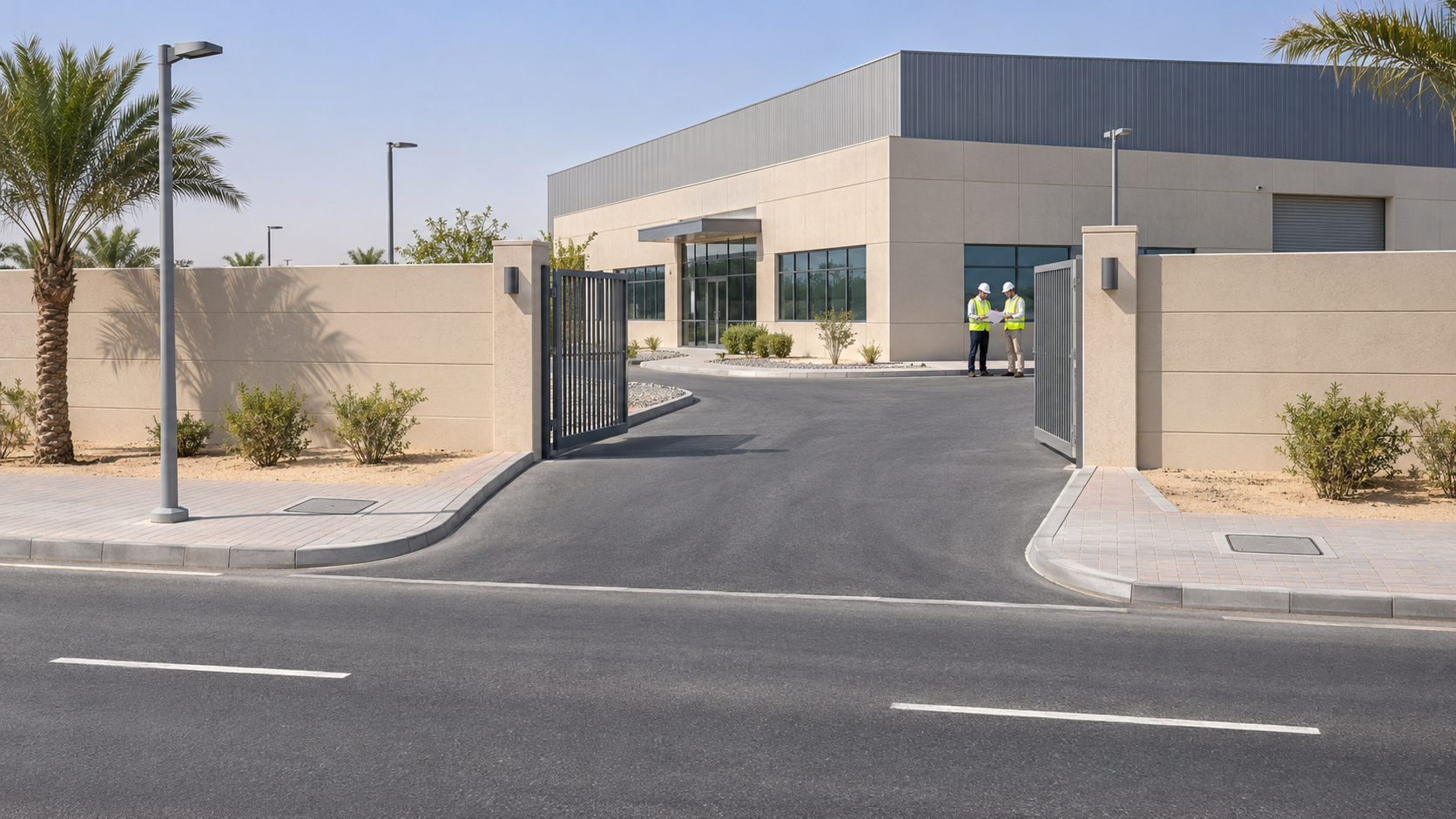
A proposed entrance can look straightforward on a site plan until the project team examines the road outside the boundary. Can vehicles approach and turn as intended? Do site levels work with the existing carriageway? Could a utility corridor constrain the connection? Fixing the gate location before answering these questions can leave important decisions unresolved.
For project access design in Abu Dhabi, the starting point is a clear brief and reliable site information. Whether you need a new access road design or support coordinating approvals, an organised initial enquiry helps the consultant distinguish what can be assessed now from what needs further investigation.
What information should you collect before an access study?
1. Plot location, boundaries and intended use
Provide the project location, plot reference where available, boundary plan, intended use and current development stage. Explain whether the request concerns a new entrance, an alteration to an existing access or an external access road. State whether it will serve permanent operations or temporary construction traffic: these are different tasks and may involve different design and coordination scopes.
2. Vehicles and operating patterns
Describe who will use the entrance and how: visitors, employees, delivery trucks, buses or service vehicles. Include operating hours, anticipated peak periods and any available traffic information. Identify estimates as estimates. A layout that accommodates a passenger car may not accommodate a large delivery vehicle in the same way.
3. Available drawings and previous correspondence
Share the latest site layout, gate positions, parking and loading arrangements, and any available topographic survey, utility records or earlier reports. Include previous submissions, approvals and review comments, with document dates and revision references. If an entrance location is only a proposal, label it accordingly rather than presenting it as approved.
Why must the entrance be considered with roads and utilities?
An entrance connects the operation inside the plot to the surrounding road network. Engineering assessment may therefore consider approach movements, nearby junctions and accesses, visibility, pedestrians, vehicle turning paths and space for vehicles to wait within the site. The question is how access will function, not simply where a gap can be drawn in the boundary.
Levels and drainage also need to be considered together. How does the site meet the road and footway, and where will stormwater flow? Utility routes, inspection chambers and lighting columns may constrain a proposed connection. Existing records help identify what needs checking; they do not automatically replace the site verification that the specialist considers necessary.
Where the road scope calls for ground assessment or pavement design, the consultant identifies the appropriate geotechnical information. Our article on what a geotechnical investigation gives the designer explains the value of those inputs. It does not mean that every entrance needs the same investigation programme.
Design, coordination and approval: what is the difference?
- Engineering design: developing the solution, drawings, calculations and agreed deliverables using site information and applicable standards. Depending on the appointment, this may include geometry, levels, drainage or pavement design.
- Requirements coordination: identifying relevant authorities and project interfaces, gathering inputs, checking conflicts and following up comments within the agreed service.
- The approval process: preparing submissions, tracking reviews and addressing comments. The competent authority makes the decision; starting the process does not guarantee approval.
The Traffic Impact Study system manual published by Abu Dhabi Mobility describes routes including a Circulation Plan, Traffic Impact Study and Transport Master Plan, together with submission information. The consultant uses the official process to establish what applies to the development; these terms are not a standard package for every entrance.
Design approval also does not automatically include supervision, construction or temporary traffic arrangements during the works. Identify each service separately and confirm the requirements for the intended stage before moving into it.
How do you define the scope before requesting a quotation?
Review the group’s engineering services to identify the area of your enquiry, then ask where the study starts and ends. Does it cover the gate alone, the external access road and network connection, or circulation inside the plot as well? Agree the deliverables, inputs and responsibilities instead of relying on a broad description such as “design and approvals”.
- Deliverables: design stage, drawings, reports and required file formats.
- Information: what the client supplies, what the consultant collects, and any additional surveys or specialist studies that may be needed.
- Follow-up: authorities and stages included, and how comments and revisions will be handled.
- Exclusions: utility diversion work, specialist assessments, supervision and construction where these are outside the appointment.
- Fees and programme: professional fees distinguished from external charges where applicable, with dependencies on complete inputs and authority reviews made clear.
This gives project managers a more consistent basis for comparing proposals and understanding the effect of later changes to the development use or entrance position.
A published example: SAC’s aviation facility access road approvals
The published record for access road approvals for an aviation facility in Abu Dhabi identifies Super Arc Consultant (SAC) as responsible for the external access road approval scope. Its work included gathering site information, reviewing existing conditions, coordinating utility requirements and progressing the approval stages identified for that project.
The record names Design NOC, IDAS and TPD approvals within that scope. These are project-specific details, not evidence that every development follows the same route. Nor does the record attribute road construction to SAC. The relevant lesson is the connection between understanding the site, coordinating requirements and preparing the review package.
Visit the Super Arc Consultant (SAC) company page to identify the consultancy business within the group, then specify the task you want to discuss in your enquiry.
Mistakes to avoid when preparing the brief
- Sending only a location screenshot: include plot boundaries, intended use and the requested task, and identify missing information.
- Fixing the gate before reviewing its road connection: present the position for assessment and explain any actual constraints on changing it.
- Mixing drawing revisions: assemble current files and flag changes since the previous submission.
- Combining temporary and permanent access: state the stage, vehicles and operating purpose of each.
- Assuming “approvals” covers everything: record the included authorities, deliverables, fees and exclusions in the appointment scope.
Before contacting a consultant: a practical checklist
- Project location, plot boundary plan and proposed use.
- A clear task: new entrance, modification or external access road; temporary or permanent.
- Vehicle types, operating hours and available traffic information.
- Latest layouts, survey and utility information, with gaps identified.
- Earlier correspondence, current review stage and document revision references.
- Requested service, target milestone and coordination contact.
This checklist is for the initial enquiry. It is not a mandatory document schedule for an authority submission.
Frequently asked questions
Can I enquire before the survey and drawings are complete?
Yes. You can discuss the scope using the information available. Identify unfinished items so the team can establish what supports an initial assessment and what is needed before design development or submission.
Does every entrance need the same traffic impact study?
The word “entrance” alone does not determine the study type. The development use, scale, traffic and applicable official requirements need to be reviewed before the specialist and relevant authority establish the appropriate route.
Does approval coordination include changes to existing utilities?
Coordination may identify a conflict that needs resolving. Utility diversion design, construction, charges and responsibilities should be defined separately or explicitly included in the appointment.
Does design approval mean construction can start?
That should not be assumed. The team needs to check the approvals, permits and conditions associated with the construction stage before work begins, according to the work and relevant authority requirements.
Start your access road enquiry with a clear brief
Planning an entrance or access road in Abu Dhabi? Contact Super Arc Group to discuss your requirements with the relevant team. Send the location, intended use, available drawings and current approval stage. Specify whether you need a new design, review of an existing proposal or requirements and approval coordination. These inputs provide a practical starting point for discussing the service scope and the information needed for a project-specific quotation.
Share this article
If you found this article helpful, share it with others